Why Choose a Backup Inverter for Your Power Needs?
In today’s world, a reliable power supply is essential. Many face unexpected outages. This can disrupt daily routines and impact businesses. That's where a Backup Inverter comes into play. Using a Backup Inverter can provide a seamless transition of power during outages. It ensures that critical devices stay operational, from medical equipment to home appliances.
Choosing a Backup Inverter might seem simple, but the decision requires careful consideration. Various models offer different capacities and features. Understanding your power requirements is vital. A common mistake is to underestimate the necessary wattage, leading to inefficiencies. Incompatible devices can also hinder performance.
Investing in a high-quality Backup Inverter significantly enhances your power reliability. Expert advice can guide you through selecting the right model. A solid Backup Inverter can save you from the fallout of sudden blackouts. Your peace of mind is worth the investment. However, adequate research is key; every home has unique demands. What works for one may not suit another. Balancing your energy needs with a practical choice is essential for long-term satisfaction.

Understanding Backup Inverters: Definition and Functionality
Backup inverters play a crucial role in maintaining power continuity. They provide an alternative source of energy when the main power supply fails. Understanding their basic functionality helps you make informed decisions for your energy needs.
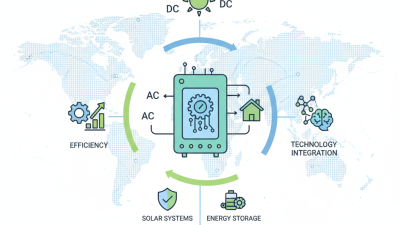
A backup inverter converts DC power into AC power, allowing you to run essential devices during outages. According to a report by the International Energy Agency, over 900 million people worldwide rely on backup power solutions. As power failures become more frequent, many households are considering backup inverters. They can power critical appliances and security systems, ensuring safety and comfort.
While choosing a backup inverter, consider its capacity and efficiency. An inverter's output should match your power needs. Some devices may not work optimally during interruptions. The market is full of options, yet many users find themselves overwhelmed. Researching reviews and specifications can identify the best fit. Embracing this technology can lessen reliance on the grid, but it is not a perfect solution. Acknowledging its limitations is vital for a reliable power strategy.
Why Choose a Backup Inverter for Your Power Needs?
| Feature |
Description |
Benefits |
Ideal Usage Scenarios |
| Power Supply Support |
Provides backup power during outages. |
Ensures continuity of operations, maintains productivity. |
Home, office environments, and critical systems like healthcare. |
| Voltage Regulation |
Stabilizes the voltage to protect sensitive equipment. |
Prevents damage and prolongs equipment lifespan. |
Data centers, laboratories, and manufacturing units. |
| Frequency Support |
Maintains a consistent frequency in power delivery. |
Improves performance of grid-dependent systems. |
Commercial buildings and renewable energy setups. |
| Compact Design |
Many models have space-saving designs. |
Easier installation in tight spaces. |
Apartments, small offices, and mobile systems. |
| Portable Options |
Some inverters are designed for easy transport. |
Ideal for users who require temporary power solutions. |
Outdoor events, construction sites, and camping. |
Key Benefits of Using Backup Inverters for Power Reliability
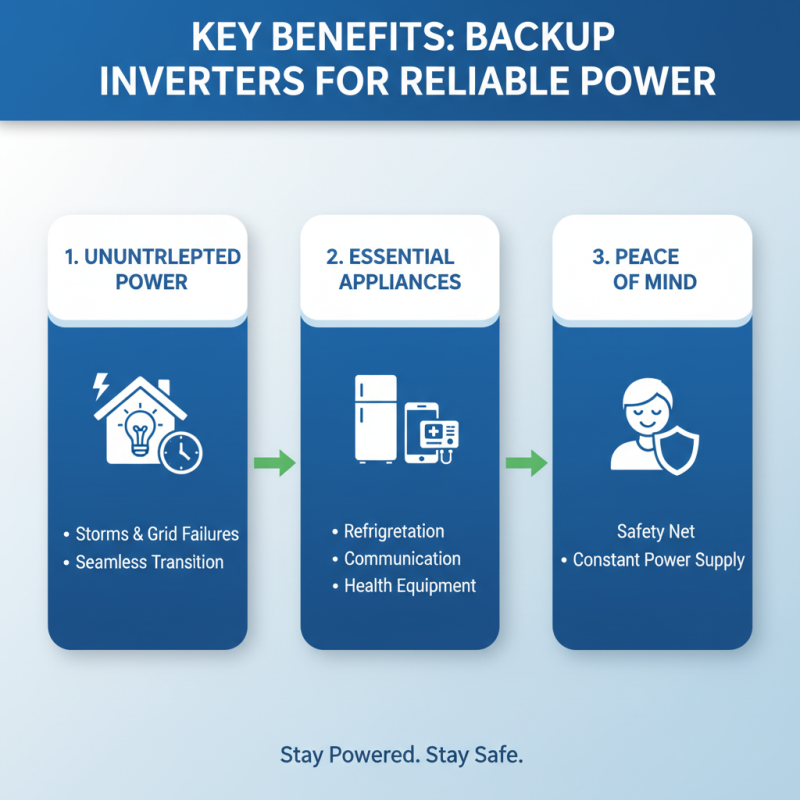
Backup inverters offer crucial benefits for anyone looking to ensure uninterrupted power supply. One major advantage is their role in enhancing power reliability during outages. In regions prone to storms or grid failures, a backup inverter acts as a safety net. You can keep your essential appliances running smoothly, from refrigerators to medical devices. This reliability provides peace of mind, knowing that your power needs are met even in unexpected situations.
When selecting a backup inverter, think about your specific needs. How much power do you typically require? Consider the devices you cannot afford to lose during a blackout. It’s common to underestimate power demands, so take a moment to evaluate your consumption. This reflection can guide you toward making a better choice.
Tips: Conduct regular maintenance on your backup inverter. Dust and debris can decrease efficiency. Also, familiarize yourself with its operation. In an emergency, you don’t want confusion. Knowing how to activate and manage the inverter will save time. Finally, keep your inverter's batteries in good condition, as they are crucial for optimal performance.
Factors to Consider When Choosing a Backup Inverter
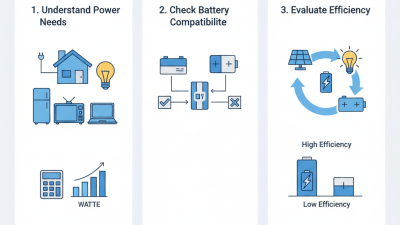
When selecting a backup inverter, several factors come into play. Power capacity is crucial. Understand your essential power needs. Calculate the total wattage of devices you want to run. This ensures you choose an inverter capable of handling your requirements, even during peak usage.
Efficiency is another key factor. A highly efficient inverter minimizes energy loss during conversion. Look for models with at least 90% efficiency. Also, consider the battery type you'll use. Compatibility affects performance and lifespan. Lead-acid and lithium-ion batteries have different characteristics. Assess which works best for your situation.
Moreover, think about the inverter's features. Some models offer advanced options like USB ports or solar compatibility. While these features may seem appealing, they can add complexity and cost. Analyze whether you truly need them. User-friendly design is vital too. Would you manage a complicated system in a power outage? Keep practicality in mind. Balancing features with actual needs is essential for your decision.
Power Needs Comparison: Backup Inverter Options
This chart compares different power outputs for backup inverters, helping you understand the available options based on your power needs.
Common Applications of Backup Inverters in Various Settings
Backup inverters offer reliable power solutions in various settings. They are essential for homes, businesses, and outdoor activities. In residential areas, backup inverters can keep essential appliances running during outages. This ensures that residents stay safe and comfortable, preserving food and maintaining security systems.
For businesses, the stakes are higher. A sudden power loss can disrupt operations and lead to financial losses. Backup inverters help maintain critical systems, like point-of-sale devices and data servers. This reliability supports business continuity, enabling firms to operate smoothly even during unexpected power interruptions.
Here are some tips for choosing the right backup inverter. Assess your power needs carefully. Calculate the wattage of essential devices you wish to power. Consider how long you will need the inverter to run those devices. Regular maintenance is also vital. Periodically test your inverter to ensure optimal performance. A well-maintained inverter can be a reliable safeguard against power disruptions.
Maintenance Tips for Ensuring Optimal Performance of Backup Inverters
Maintaining your backup inverter is crucial for ensuring its optimal performance. Regular inspections can identify issues before they escalate. According to a report by the National Renewable Energy Laboratory (NREL), improper maintenance can reduce inverter efficiency by up to 30%. This inefficiency not only affects energy output but can also lead to costly repairs.
Cleaning the inverter regularly is a simple yet effective task. Dust and debris can accumulate, obstructing cooling vents and leading to overheating. It’s recommended to wipe down the unit with a damp cloth every few months. Ensuring proper ventilation is equally important. Inverters require space to dissipate heat. A cramped location can result in premature failure, which is often overlooked.
Listening to your inverter can be a valuable practice. Unusual noises may indicate problems that need immediate attention. Furthermore, keeping the firmware updated ensures that the inverter operates efficiently. Firmware updates can improve performance and fix known bugs. Neglecting software updates can lead to vulnerabilities, potentially compromising the inverter’s reliability.