How to Choose the Right Car Inverter for Your Needs?
Choosing the right car inverter can be challenging. It’s essential to understand your specific needs. John Smith, an expert in automotive electronics, once said, "Selecting the correct car inverter can make or break your travel experience." This statement resonates deeply with many travelers and adventurers.
Car inverters come in various shapes and sizes. Each type serves a different purpose. Some are designed for power-hungry devices, while others are for lighter use. A wrong choice can lead to frustrations, such as devices not charging or running inefficiently. It's important to reflect on what appliances you need to power on the road.
Consider your power needs carefully. Think about wattage requirements and outlet specifications. Not all car inverters can handle high-powered devices. Also, portability is crucial for ease of use. A bulky inverter may not fit comfortably in your vehicle. Aim for a balance that suits your travel lifestyle and demands.

Understanding Car Inverters: What They Are and How They Work
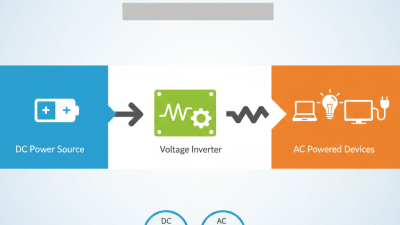
Car inverters are handy devices. They convert
DC power from your vehicle's battery into AC power. This allows you to use various electronic devices
while on the road. Understanding their purpose is crucial to making the right choice. Many people
rely on them for charging laptops, powering small
appliances, or running tools during outdoor activities.
When selecting a car inverter, consider its wattage.
This dictates how much power your devices can draw. A high-wattage inverter typically supports more
devices simultaneously. But, don’t forget the size and portability. Some inverters are compact and
easy to carry, while others are larger and may require more storage space in your vehicle.
You may find an inverter that meets your power needs yet lacks essential safety features.
Look for built-in protections against
overloading, overheating, and short circuits. These details matter in preventing accidents. The
market is flooded with options, making decision-making challenging. Balancing practicality, power,
and safety can feel overwhelming. It's essential to evaluate your unique needs honestly.
Types of Car Inverters: Which One Suits Your Needs?
When choosing a car inverter, understanding the different types is crucial. Car inverters typically fall into two main categories: modified sine wave inverters and pure sine wave inverters. Modified sine wave inverters are more affordable but may not power all devices effectively. They are ideal for simple electronics like phones and chargers. In contrast, pure sine wave inverters, while pricier, are better suited for sensitive equipment, such as laptops and medical devices.
According to a report from the International Journal of Electrical Engineering, around 65% of people prefer pure sine wave inverters for their versatility. This preference stems from their ability to provide stable power without fluctuating voltage. However, some users report that modified sine wave inverters are sufficient for casual use. It raises questions about individual needs versus the general recommendations made by manufacturers.
Selecting the right inverter also involves considering power output and wattage requirements. A basic inverter with a 300W capacity may suffice for small gadgets. But larger appliances may require 1000W or more. Many buyers underestimate their needs, leading to performance issues. This is a common mistake, as consumers often focus solely on price, not performance. Understanding your specific power requirements can significantly affect functionality and device longevity.
Car Inverter Types and Their Power Output
This chart illustrates the power output of different types of car inverters measured in watts. Depending on your needs, you can choose between various inverter types such as Modified Sine Wave, Pure Sine Wave, and more, each providing different levels of power output for your usage requirements.
Key Specifications to Consider When Choosing a Car Inverter
When selecting a car inverter, consider its wattage capacity. It determines how many devices you can power. For example, if you plan to use a laptop and charge a phone, look for at least 400 watts. Higher wattage can support more devices simultaneously.
Check the output types. Many inverters provide AC outlets and USB ports. Make sure it fits your devices. A mix of outlets can be handy. However, not all inverters handle sensitive electronics well. This could cause damage or malfunction.
**Tip:** Choose a durable inverter with safety features. Look for overload protection and short-circuit prevention. These features enhance safety but can also increase costs.
Don’t skip weight and size. Compact models are easier to store but might have lower power. However, bulky units may be hard to handle. Assess your vehicle’s space.
**Tip:** Test your inverter before long trips. Sometimes, it might not perform as expected. This testing can save you from frustrating surprises on the road. It's not just about the specs; it’s also about real-life use.
How to Choose the Right Car Inverter for Your Needs? - Key Specifications to Consider When Choosing a Car Inverter
| Specification |
Description |
Importance |
| Power Output |
Measured in watts, indicates the maximum power the inverter can supply. |
Crucial for determining if the inverter can handle your devices. |
| Type of Inverter |
Pure sine wave, modified sine wave, or square wave. |
Affects compatibility with various devices and efficiency. |
| Input Voltage |
Typically 12V or 24V, depends on your vehicle's battery. |
Must match your vehicle's power supply to function correctly. |
| Port Availability |
Number and types of ports (AC outlets, USB ports, etc.). |
Ensures you can connect all necessary devices. |
| Size and Weight |
Physical dimensions and weight of the inverter. |
Affects portability and installation options. |
| Safety Features |
Includes overload protection, short circuit protection, etc. |
Essential for preventing damage to devices and ensuring user safety. |
| Price |
Cost of the inverter. |
Must fit within your budget while meeting your needs. |
Assessing Your Power Requirements for Car Electronics
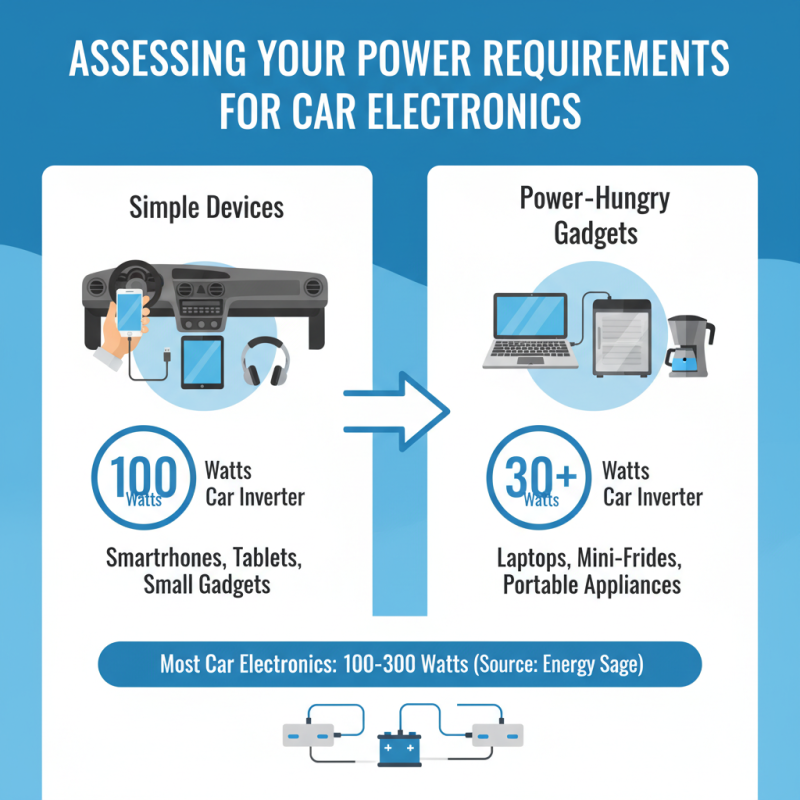
When selecting a car inverter, assessing your power needs is crucial. According to Energy Sage, most car electronics require between 100 and 300 watts. For simple devices like smartphones, a 100-watt inverter suffices. But for more power-hungry gadgets, such as laptops or mini-fridges, you might need at least 300 watts.
Consider what devices you'll use while on the road. A travel coffee maker, for instance, can demand over 600 watts. If you're unsure, it's wise to calculate the total wattage of your devices. Keep in mind that having a buffer is essential for smooth operation. A 20-30% margin ensures your inverter won't be pushed to its limits.
Many overlook the efficiency ratings. Inverters operate at varying efficiencies. A report from the U.S. Department of Energy indicates some inverters can be as low as 80% efficient. This inefficiency can lead to wasted power and increased strain. Carefully researching these figures can lead to better long-term decisions. Balancing your needs and efficiency ratings may require some trial and error.
Portability and Design: Factors to Consider for Car Inverters
When choosing a car inverter, portability is key. You need something lightweight and easy to carry. Look for compact designs that won't take much space. A small inverter can fit in your glove compartment or backpack. This is particularly useful for road trips. You may not always have space for bulky equipment.
Consider the design as well. A good inverter should have easy-to-use controls. Look for clear and visible ports. You want to plug in your devices quickly, especially on the go. Check if the inverter has built-in protections. These features can prevent overheating and short circuits, which is vital for safety.
Not all car inverters are created equal. Some may lack durability, particularly the cheaper options. Reflect on your needs before buying. Think about how often you’ll use it. Will you use it sporadically or daily? If you’re uncertain, start with a reliable, smaller model. It may serve you well until your needs change.