Top 10 Power Inverters for Your Home Needs?
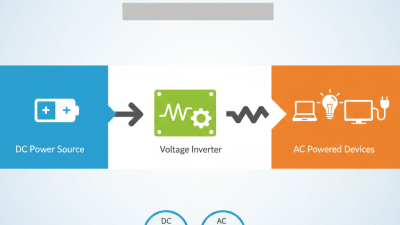
When it comes to enhancing your home's power needs, a reliable Power Inverter is essential. A power inverter converts direct current (DC) into alternating current (AC). This process allows you to use battery power for home appliances. With the right inverter, you can power lights, refrigerators, and electronics during emergencies.
Choosing the best Power Inverter can be challenging. There are numerous options on the market, each with unique features and specifications. While some may focus on wattage, others emphasize portability or efficiency. It’s important to consider your specific needs before making a choice.
Think about how often you'll use the inverter. Will it be for occasional camping trips or daily home use? It’s crucial to reflect on your priorities. Your choice could impact both your budget and comfort. In the bustling world of home improvement, identifying the right Power Inverter is worthwhile. Equip yourself with the knowledge needed to make an informed decision.
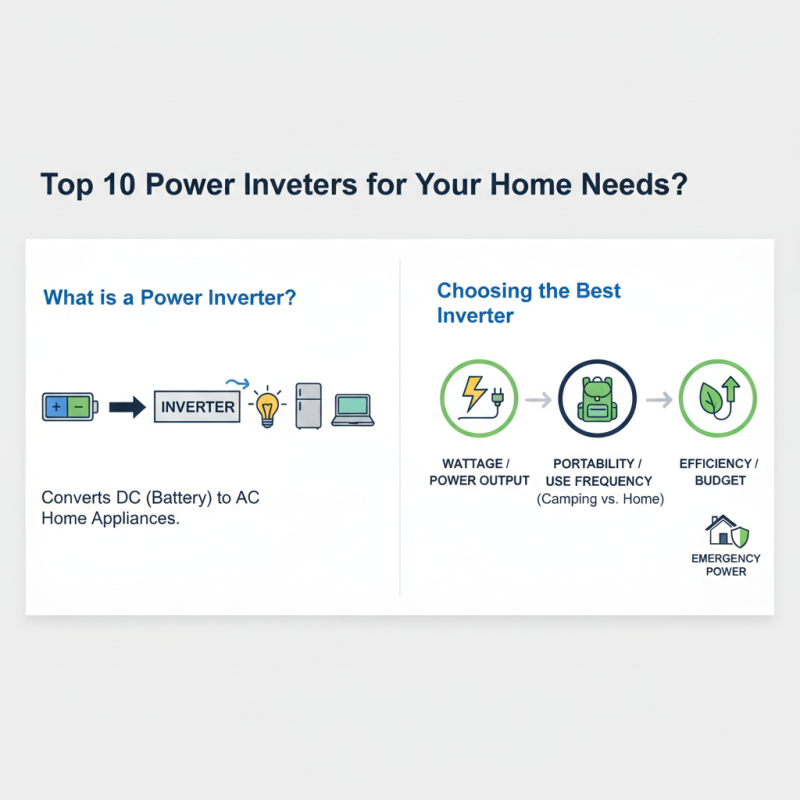
Overview of Power Inverters and Their Importance for Home Use
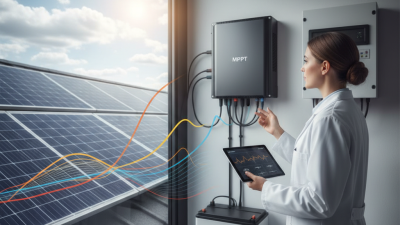
Power inverters are essential devices for converting DC power from batteries into AC power. This conversion allows you to use standard household appliances and devices safely. Without power inverters, our ability to harness energy from renewable sources like solar panels would be severely limited. They enhance our energy independence and ensure that we can keep our homes powered in emergencies.
Many homeowners overlook the significance of these inverters. They may assume that the standard grid is sufficient. However, in some situations, like power outages, having a quality inverter becomes critical. Imagine a scenario where your refrigerator and lights stop working during a storm. A reliable inverter could save the day, providing necessary power. Yet, how often do we check if our inverter is functioning properly? Regular maintenance is crucial, but people often forget this step.
Choosing the right inverter involves careful consideration. Factors like power capacity and efficiency are vital. It’s not just about picking a model off the shelf. You need to think about your needs and power requirements. Sometimes, spending less can cost more in the long run if you are left without power when it matters most. Reflecting on these aspects can help guide your decision toward a suitable power inverter for your home.
Top 10 Power Inverters for Your Home Needs
| Model |
Type |
Power Output (W) |
Efficiency (%) |
Weight (lbs) |
Price ($) |
| Model A |
Pure Sine Wave |
2000 |
90 |
25 |
450 |
| Model B |
Modified Sine Wave |
1500 |
85 |
20 |
300 |
| Model C |
Pure Sine Wave |
3000 |
92 |
30 |
600 |
| Model D |
Modified Sine Wave |
1000 |
80 |
15 |
200 |
| Model E |
Pure Sine Wave |
4000 |
94 |
35 |
800 |
| Model F |
Modified Sine Wave |
600 |
75 |
10 |
150 |
| Model G |
Pure Sine Wave |
2500 |
88 |
28 |
500 |
| Model H |
Modified Sine Wave |
800 |
78 |
12 |
175 |
| Model I |
Pure Sine Wave |
3500 |
91 |
32 |
700 |
| Model J |
Modified Sine Wave |
1200 |
82 |
18 |
220 |
Top 10 Power Inverters: A Detailed Comparison of Specifications
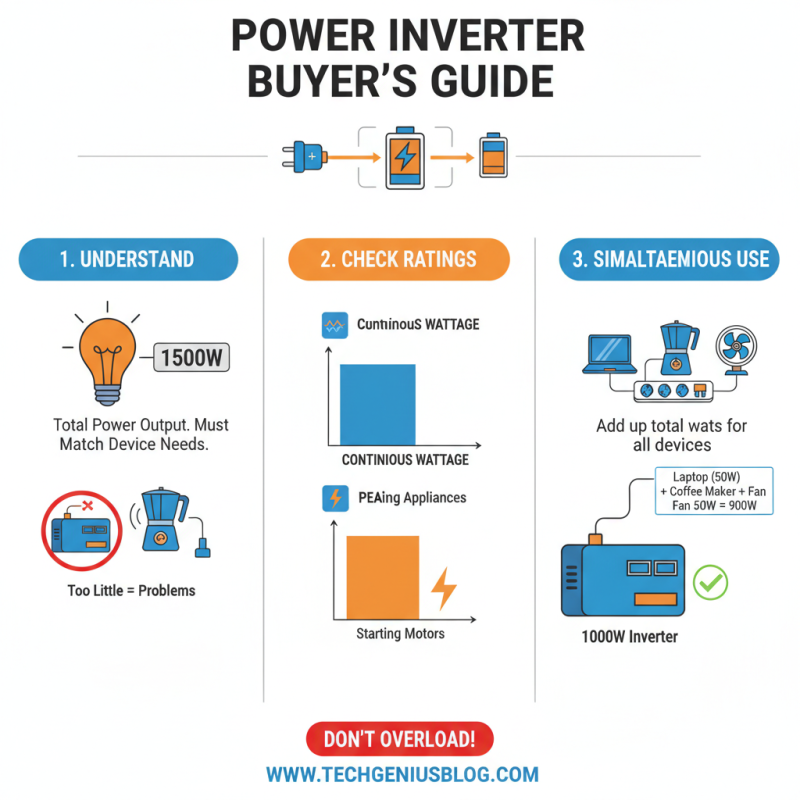
When comparing power inverters, specifications are key. They dictate how well an inverter performs. Key specifications include power output, input voltage, and the type of wave produced. For efficient use, you need to match the inverter's output with your devices' requirements. Some inverters provide modified sine wave output. These are cheaper but may not work for sensitive electronics. Pure sine wave inverters offer cleaner power but are generally pricier.
Battery capacity and efficiency ratings also matter. Some inverters provide longer runtime if paired with the right battery. Users often overlook continuous vs. peak power ratings. This can lead to unexpected failures. Weight and size can be critical factors for portability. Lighter models are easier to transport but may sacrifice power. It's essential to balance portability and performance when making a choice. Some buyers might be swayed by ratings without considering their specific needs. Reflecting on personal requirements and use cases is vital for making the right decision.
Top 10 Power Inverters for Your Home Needs
This chart compares the power output (in watts) and peak power capacity of the top 10 power inverters suitable for home use. The first set of bars represents the continuous power output, while the second set indicates the peak power capacity.
Customer Reviews and Ratings: Insights on Performance and Reliability
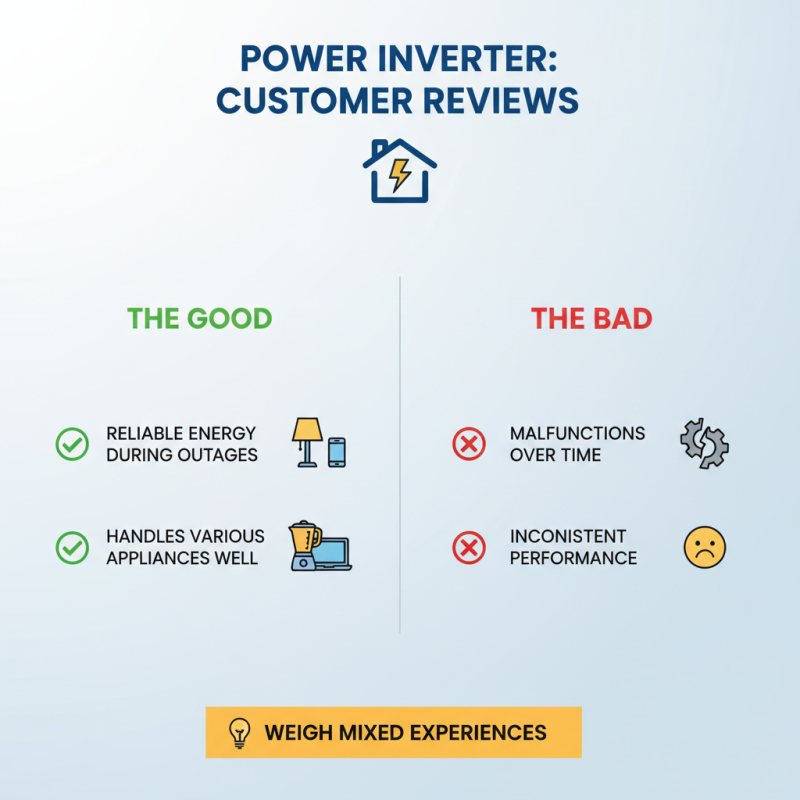
When it comes to power inverters, customer reviews often reveal valuable insights. Many users highlight performance, noting how well a unit can handle various appliances. Some units shine during power outages, providing reliable energy for essential devices. However, not every model impresses. A few users reported malfunctions over time, leading to frustration. It's crucial to weigh these mixed experiences when choosing the right inverter for your home.
Numerous reviews share thoughts on reliability. Many customers appreciate durable models that withstand the test of time. Yet, some users faced issues with overheating or electrical inefficiencies. These concerns point to the importance of proper ventilation and power management. It's clear that while many inverters perform well, careful selection is vital. User feedback helps identify which models might offer consistent power without the hassle of breakdowns.
Installation and Maintenance Tips for Home Power Inverters
When considering power inverters for home use, installation is a crucial step.
Improper installation can lead to inefficiency or even hazards. It’s vital to
ensure that the inverter is mounted securely. The location should allow adequate
ventilation. Overheating is a common issue that can shorten the lifespan of the
unit. According to a recent industry report, 30% of inverter failures
are due to improper installations.
Maintenance plays a key role
in the longevity of power inverters. Regular inspections are essential. Check for
dust buildup in vents and clean them periodically. Loose connections can also cause
issues, leading to power loss or fluctuations. Experts recommend a visual inspection
every six months. Electrical components can degrade over time. Replacing worn-out parts proactively
can prevent sudden breakdowns. The average repair cost for malfunctioning inverters
can exceed $200. Make sure to keep all connections secure and tight.
Consider also the environment where the inverter operates. Humidity and extreme
temperatures can affect performance. The ideal operating range is between
32°F to 104°F. Notably, over 40% of homeowners do
not monitor their inverter's performance regularly. This oversight can lead to unexpected
failures and costly repairs. By staying proactive with installation and maintenance,
you can ensure your power inverter operates smoothly.