What Is the Best Backup Power Inverter in 2026?
Choosing the best Backup Power Inverter in 2026 depends less on a bold wattage claim than on what you need to keep running. A refrigerator, router, and a few lamps place different demands on an inverter than a sump pump or workshop tool. The right choice should match both the equipment’s normal draw and its brief startup surge. A 1,000-watt rating alone does not tell the whole story.
This guide compares the details that matter in real backup situations: continuous and surge output, battery compatibility, pure sine wave performance, protection features, and ease of installation. It also considers how long a system may run, because runtime depends on battery capacity, load, and conversion losses. Check the appliance labels, measure your essential loads where possible, and leave a sensible margin. Small details matter. Cable size, ventilation, and clear installation instructions can affect dependable operation as much as the headline specifications. One awkward truth: published figures rarely describe every home or every battery setup. Treat them as a starting point, not a promise. We’ll look at options for different budgets and needs, explain the trade-offs, and show what to verify before buying. There may be no single winner for everyone, but a careful match can help keep essential devices running when grid power fails.
Map Critical Loads Against 120/240 V AC and Rated Running Watts
What Is the Best Backup Power Inverter in 2026?
Choosing an inverter starts with a load map, not a headline wattage. List each essential device, its voltage, running watts, and starting surge. A refrigerator may run on 120 V, while a well pump or central HVAC unit may need 240 V. Check the equipment nameplate; similar-looking appliances can draw very different power. Short bursts matter.
The U.S. Energy Information Administration reported average residential electricity use of about 10,791 kWh per customer in 2022. That annual figure offers context, but it cannot size an outage system: inverter capacity depends on which devices run at the same time. Add the running watts of intended loads, then check the largest motor-starting surge against the inverter’s surge rating. Keep a margin. A tight calculation can fail when a compressor starts.
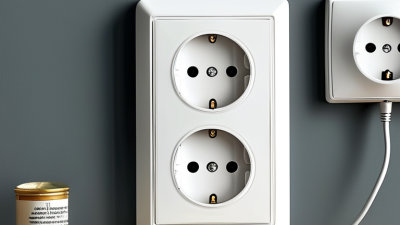
For a 120/240 V home, verify that the inverter supplies split-phase output if you need both legs, not merely a 120 V receptacle. Mark essential circuits on a panel diagram and note which ones can operate together. Include control boards, pumps, and chargers; small loads are easy to forget. The U.S. Department of Energy’s outage-preparation guidance recommends identifying critical equipment and its power needs before an emergency. One imperfect but useful step: test the planned combination under load, because paper estimates rarely capture every start-up.
What Is the Best Backup Power Inverter in 2026? - Map Critical Loads Against 120/240 V AC and Rated Running Watts
Compare the voltage, typical running demand, and possible startup surge of essential household loads before choosing an inverter. Values below are planning ranges; check each appliance’s nameplate or manual for its actual requirements.
| Load or appliance |
Typical AC voltage |
Typical running watts |
Possible startup surge |
Planning note |
| LED lighting, per bulb |
120 V |
5–15 W |
Usually negligible |
Add the wattage of all bulbs that will be on at once. |
| Internet router or modem |
Typically 120 V via adapter |
10–30 W |
Usually negligible |
Use the adapter’s input rating if available. |
| Refrigerator |
120 V |
100–250 W |
About 600–1,200 W |
Compressor startup can determine the inverter’s surge requirement. |
| Chest freezer |
120 V |
100–300 W |
About 500–1,200 W |
Allow for compressor startup, especially if it may start while other loads are running. |
| Furnace blower |
Often 120 V; verify equipment |
300–800 W |
Motor-dependent; check nameplate |
This estimate is for the blower only; controls, ignition, and other components add load. |
| Sump pump |
Commonly 120 V; some models differ |
800–1,500 W |
About 1,600–4,500 W |
Pump size and motor type have a major effect; use the pump’s rated data. |
| Microwave oven |
120 V |
1,000–1,500 W input |
Usually close to running demand |
Use electrical input watts, not the lower cooking-output wattage. |
| Portable electric space heater |
120 V |
750–1,500 W |
Usually close to running demand |
A high continuous draw; adding one can substantially increase required inverter capacity. |
| Well pump, approximately 1/2 hp |
Often 240 V; verify pump |
About 1,000–1,500 W |
About 3,000–4,500 W |
A 120 V-only inverter cannot directly supply a 240 V pump. |
| Central air conditioner |
Commonly 240 V |
Varies widely by unit |
May greatly exceed running watts |
Use the unit’s electrical data and measured or specified starting demand; do not size from tonnage alone. |
How to match the inverter to critical loads
| Check |
What to compare |
Selection implication |
| Voltage compatibility |
Every critical appliance’s rated voltage: 120 V, 240 V, or another specified value. |
Choose 120 V output for 120 V loads only. Loads requiring both 120 V and 240 V generally need a compatible split-phase 120/240 V output. |
| Rated running watts |
Add the running watts of loads intended to operate at the same time. |
The inverter’s continuous AC output rating must meet or exceed the simultaneous running load; extra capacity provides operating headroom. |
| Starting surge |
Account for motor or compressor startup while other loads are already operating. |
The inverter’s surge rating and surge duration must support the combined demand; a brief peak rating alone may not indicate how long it can be sustained. |
| Circuit and installation |
Output configuration, breaker capacity, wiring, transfer equipment, and applicable electrical requirements. |
Have fixed-wiring or panel connections designed and installed in accordance with local codes by a qualified professional. |
Note: Appliance wattage and motor starting current vary by model and operating conditions. Confirm actual input ratings before purchase, and avoid running loads whose combined demand exceeds the inverter’s continuous or surge limits.
Size Continuous Output and Motor-Starting Surge for Connected Loads
A backup inverter must carry the connected loads continuously, not just match their momentary peaks. Add the running watts of appliances expected to operate together, then allow headroom for battery charging and changing load. Read motor nameplates carefully: watts, volt-amps, and power factor are not interchangeable. A 1,200-watt pump, for example, could briefly need 3,600 watts if its starting demand reaches three times its running load. That is an illustration, not a safe universal multiplier. Surge duration matters, too; an inverter may advertise a high peak but sustain it for only seconds.
Surge is the trap.
NEMA MG 1-2021 lists locked-rotor kVA-per-horsepower code bands, showing that motor-starting demand varies by motor design. Use a motor’s nameplate or manufacturer’s published starting data when available; otherwise, measure startup current under realistic conditions. For multiple motors, assume they might start together unless controls prevent it. Check the inverter’s continuous rating at the expected temperature, plus its surge rating and duration. A refrigerator may start while a pump is already running. I have seen that detail missed in otherwise careful load lists. Leave margin, but do not size blindly: oversizing can raise cost, while undersizing can cause shutdowns at the worst moment.
Estimate Runtime: Battery Wh = Volts × Amp-Hours; Runtime = Usable Wh ÷ Load W
What Is the Best Backup Power Inverter in 2026?
Runtime starts with a useful estimate: battery watt-hours equal volts multiplied by amp-hours. A 12-volt, 100-Ah battery stores about 1,200 Wh nominally. That is a starting point, not a promise. Battery limits, age, temperature, and inverter losses all reduce the energy available to appliances. If 80% of the battery’s capacity is usable and inverter efficiency is 90%, about 864 Wh reaches the load. At a steady 120-watt draw, divide 864 by 120 for roughly 7.2 hours. Not the full story.
Check the inverter’s continuous power rating against the equipment you plan to run. Motors and compressors may briefly demand more power when starting, so check surge requirements too. Loads fluctuate. A refrigerator cycles, while a lamp draws more steadily. For a better estimate, measure the real load or use its typical operating wattage, then divide usable Wh by load W. Keep a margin.
The formula is practical, but it can still overstate runtime if you use the battery’s full nameplate capacity. Inverter idle draw, cold conditions, and an aging battery can shorten the result. I would treat the number as a planning estimate, then test the setup with the actual devices. Note the starting charge, load, and elapsed time. Small details matter, and estimates are not field measurements.
Compare Published Efficiency, Transfer Time, and Output-Waveform Data
A backup power inverter is not judged by one impressive number. Published efficiency figures matter, but check the conditions behind them. Was the unit tested near full load, at room temperature, or with a small resistive device? Efficiency changes with demand. A quiet refrigerator cycling on and off may produce different results from a steady lamp. Look for a test method and load level, not just a headline percentage.
Transfer time tells you how quickly power returns after an outage. A few milliseconds can matter to a desktop computer or network equipment, while a heater may not notice the gap. Compare the published time with the needs of your actual devices. Manufacturers may measure transfer under specific conditions, so the figure is useful, but not a guarantee for every setup. Check whether the inverter’s output remains stable during the switch.
Waveform data deserves equal attention. A low-distortion sine wave is generally a better match for sensitive electronics and motor-driven appliances than a rougher stepped waveform. Look for total harmonic distortion figures, if published, and confirm the stated waveform type. Specs can still leave gaps. I would compare the numbers, then test essential devices during a planned outage. Note startup sounds, screen resets, and unusual warmth; those small details can expose a mismatch.
Check NFPA 70 Article 702 and UL 1741 Requirements for Applicable Systems
A backup inverter is not “best” just because its wattage looks generous. For systems covered by NFPA 70 Article 702, the key question is whether the optional standby system can serve its intended loads safely. Check the transfer equipment, conductor sizing, overcurrent protection, and load capacity against the adopted code and the installation. A refrigerator starting, a sump pump cycling, and lights running together can stress an undersized system. Details matter. Article 702 does not apply to every backup arrangement, so confirm the system classification with the authority having jurisdiction.
UL 1741 addresses inverters and related equipment used in distributed energy systems, including applicable interconnection functions. Look for certification that matches the inverter’s intended use and configuration; a product mark alone does not establish that the complete installation meets code. Where the inverter can operate in parallel with utility power, verify that its listed functions and settings suit the system design. Requirements can depend on the equipment, connection method, and locally adopted code edition. Not always simple.
During review, compare the equipment documentation with the one-line diagram and transfer-switch ratings. Confirm which circuits will remain powered, how loads are managed, and whether neutral switching is required for that configuration. Keep labels and operating instructions accessible near the equipment. A careful paper review helps, but it can miss a real-world mismatch: the site wiring may differ from the drawing. Have qualified professionals verify the installed system and commissioning results.