What Are the Top Car Inverter Types in 2026?
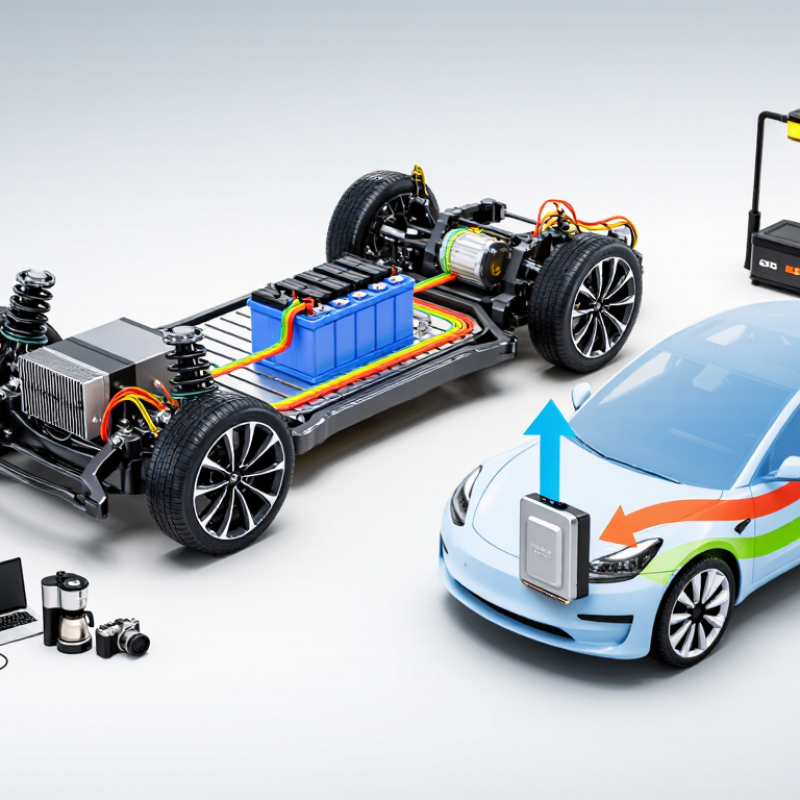
A Car Inverter can serve two very different jobs: powering household-style devices or driving an electric vehicle’s motor. The distinction matters. A compact 12-volt inverter may run a laptop at a campsite, while a traction inverter manages high-voltage power between a battery and an electric motor. These products differ in purpose, output, installation, and safety requirements.
The market context is changing quickly. The International Energy Agency’s Global EV Outlook 2024 reports nearly 14 million electric cars were sold worldwide in 2023, representing about 18% of new car sales. It projected more than 17 million sales in 2024, or over one in five new cars. Those figures do not measure inverter sales directly, but they show why vehicle power-conversion technology deserves closer attention. More electric vehicles also bring greater interest in onboard power features, including vehicle-to-load capability on selected models.
This guide compares the leading inverter types relevant to 2026, from portable modified- and pure-sine-wave units to integrated traction and bidirectional systems. It explains what each type does, where it fits, and which specifications deserve scrutiny. A large wattage label is not enough. Continuous output, surge capacity, battery voltage, cooling, and vehicle compatibility all matter. Some product claims remain difficult to compare fairly, so buyers should verify details against manufacturer documentation. That caveat is important.
Define Vehicle Inverters: 12 V/24 V DC to 120 V/230 V AC
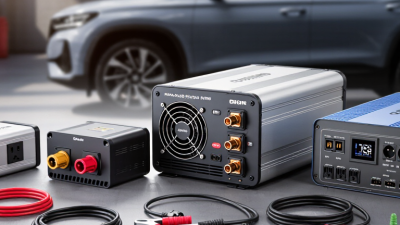
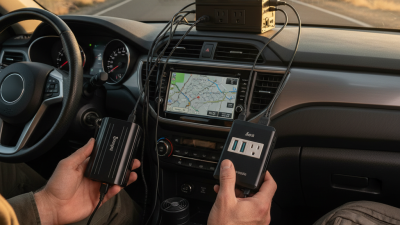
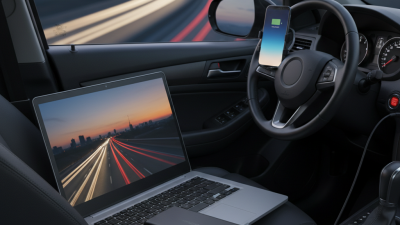
A vehicle inverter converts a car battery’s low-voltage DC into household-style AC power. A 12 V model takes input from a typical passenger-car electrical system; a 24 V model suits vehicles built around a 24 V system. They are not interchangeable. The inverter’s AC output may be 120 V or 230 V, depending on its design and intended region. That is the basic conversion. It lets drivers power selected devices, such as a laptop charger or small appliance, when a suitable outlet is unavailable.
In 2026, common inverter types include pure sine wave and modified sine wave models. Pure sine wave output closely resembles utility power and is generally a better fit for sensitive electronics or equipment with motors. Modified sine wave models may cost less, but some devices can run noisily, heat up, or fail to work as expected. Check both continuous and surge ratings against the device’s requirements; a brief startup surge can exceed its normal draw. Also consider cable size, ventilation, and battery capacity. A neat wattage label can be misleading if the inverter cannot sustain that output. And a small load still drains the battery. Running equipment with the engine off may leave too little charge to start the vehicle, so match the inverter to the task and installation.
Compare Square-Wave, Modified-Sine, and Pure-Sine Types by Output Quality
What Are the Top Car Inverter Types in 2026?
The main difference between car inverter types is the shape of their AC output. Square-wave inverters switch abruptly between voltage levels. They are simple, but their rough output can make some motors buzz, run hot, or perform poorly. Modified-sine models use stepped waveforms. They suit many basic resistive loads, such as a simple heating element, but may cause trouble with some chargers, audio equipment, and motor-driven appliances. Pure-sine inverters produce a smoother waveform, closer to household AC. They are generally the safer choice for sensitive electronics and variable-speed motors, though actual performance depends on the inverter’s specifications.
A useful reference point is IEEE 519-2022, which sets a voltage total harmonic distortion limit of 8% for systems at or below 1 kV at the point of common coupling. That limit applies to power systems, not directly to car inverters or individual appliances. Still, it shows why checking total harmonic distortion, or THD, matters. A “pure sine” label alone does not tell you the measured THD under load. Real-world results can vary.
Tips: Check the appliance manual and the inverter’s continuous wattage, surge rating, and THD specification. For a laptop charger or small fan, modified sine may work; for sensitive equipment, choose a verified low-THD pure-sine model. Test carefully. That detail is easy to overlook.
Use Below 3% THD as a Typical Pure-Sine-Wave Datasheet Benchmark
What Are the Top Car Inverter Types in 2026?
Car inverters generally use modified or pure sine wave output. The right choice depends on the equipment you plan to power, not just the wattage printed on the case. For sensitive electronics, a pure-sine-wave model is often the more suitable option. Its smoother output can reduce unwanted noise or compatibility problems with some devices.
Use below 3% total harmonic distortion, or THD, as a typical pure-sine-wave datasheet benchmark. THD describes how much a waveform differs from a clean sine wave. It is useful, but it is not a complete quality rating. Check whether the figure applies at a stated load, such as half capacity, and whether the manufacturer explains its test conditions. Details matter. A low THD number may look reassuring, yet a vague datasheet leaves room for doubt. Also compare continuous output with peak output, and allow for startup surges from tools or small appliances. A phone charger may work with many inverter types; an audio system or medical device may need closer compatibility checks. Measure your actual use, and treat the specification as one part of the decision.
Top Car Inverter Types in 2026: Output Waveform Comparison
Illustrative, normalized output over one AC cycle. Pure sine wave inverters reproduce a smooth sinusoidal waveform; modified sine wave inverters use stepped output.
Datasheet benchmark: Below 3% total harmonic distortion (THD) is a typical pure-sine-wave datasheet benchmark, not a guarantee for every inverter. THD varies by model and operating conditions; the waveforms shown are illustrative, not measured product data.
Compare High-Frequency and Transformer-Based Designs by Isolation and Size
What Are the Top Car Inverter Types in 2026?
High-frequency and transformer-based inverters solve different problems. High-frequency models use electronic switching and smaller magnetic components. That often means a lighter unit that fits beneath a seat or beside a center console. Transformer-based designs use a larger, low-frequency transformer. They are usually bulkier, but the transformer can provide galvanic isolation between input and output.
Isolation matters when a connected device, wiring fault, or vehicle setup makes electrical separation a priority. Check the inverter’s specifications: “transformer-based” does not automatically guarantee safe installation. High-frequency units can also include isolation, depending on their design. The trade-off is not perfectly tidy. A compact case may run warm under sustained load, while a heavy transformer unit can be awkward to mount. The IEA’s Global EV Outlook 2025 projected more than 20 million electric-car sales in 2025, highlighting growing demand for vehicle power electronics—but that figure does not rank accessory inverter designs.
Tips: Compare continuous output, surge capacity, cooling, and stated isolation—not just case size. Measure the mounting space, including room for airflow. A smaller inverter is not always the better fit. Check the vehicle manual and have uncertain wiring reviewed by a qualified technician.
Size Inverters: 1,000 W at 12 V Draws About 93 A at 90% Efficiency
Car inverters generally use pure-sine-wave or modified-sine-wave output. Their internal designs may also be high-frequency or transformer-based. For sizing, though, the key figure is DC current. A 1,000 W AC load at 12 V and 90% efficiency needs 1,000 ÷ (12 × 0.90), or about 93 A. That is substantial.
That figure assumes a steady 12 V supply. Under load, battery voltage can dip; at 11.5 V, the same output draws about 97 A, before cable losses. Fans, pumps, and compressors may also demand extra current briefly when starting. Keep cables short, connections secure, and follow the inverter’s cable and fuse specifications. The neat equation is useful, but real installations are messier.
For context, the National Renewable Energy Laboratory’s PVWatts Version 8 Technical Reference uses a 96% default inverter-efficiency assumption for photovoltaic system estimates. That is not an automotive-inverter rating; it shows why efficiency should be stated rather than guessed. The 90% figure here is a planning assumption, not a guaranteed field result. Heat, battery condition, and wiring all affect performance. A “1,000 W” label alone says too little: check continuous output, surge rating, and DC input limits when comparing inverter types.
What Are the Top Car Inverter Types in 2026? — Sizing Inverters by DC Current Draw
Current estimate: DC input current (A) ≈ AC output power (W) ÷ [DC system voltage (V) × assumed inverter efficiency]. The examples below use 90% efficiency; actual current varies with load, inverter efficiency, battery voltage, and wiring losses.
| Inverter type |
Typical consideration |
AC output |
DC system |
Efficiency used |
Estimated DC current |
| Pure sine wave |
Generally suitable for a broad range of AC electronics and appliances. |
300 W |
12 V |
90% |
27.8 A |
| Pure sine wave |
A common mid-range size; check the device’s startup or surge demand. |
500 W |
12 V |
90% |
46.3 A |
| Pure sine wave |
Higher DC current at 12 V makes battery and cable sizing especially important. |
1,000 W |
12 V |
90% |
92.6 A (about 93 A) |
| Pure sine wave |
A substantial load for a 12 V system; confirm the vehicle and battery can support it. |
1,500 W |
12 V |
90% |
138.9 A |
| Pure sine wave |
Very high current at 12 V; installation requirements depend on the equipment and system design. |
2,000 W |
12 V |
90% |
185.2 A |
| Pure sine wave |
For the same output and efficiency, a 24 V system draws about half the current of a 12 V system. |
1,000 W |
24 V |
90% |
46.3 A |
| Pure sine wave |
A 24 V configuration draws less current than a 12 V configuration at the same output power. |
2,000 W |
24 V |
90% |
92.6 A |
| Pure sine wave |
At the same output power, a 48 V system draws about one-quarter the current of a 12 V system. |
1,000 W |
48 V |
90% |
23.1 A |
| Modified sine wave |
Often used for simpler loads; some electronics, motors, or chargers may run less efficiently or may not be compatible. |
300 W |
12 V |
90% assumed |
27.8 A |
| Modified sine wave |
Check appliance compatibility and the inverter’s rated continuous output before use. |
500 W |
12 V |
90% assumed |
46.3 A |
| Modified sine wave |
The current figure is a calculation based on the stated efficiency assumption, not a guaranteed operating value. |
1,000 W |
12 V |
90% assumed |
92.6 A (about 93 A) |
Note: These are estimated DC currents at the inverter input for the listed AC output power. For practical installation, follow the inverter and vehicle manufacturers’ requirements for battery capacity, cable size, fuse protection, and ventilation.