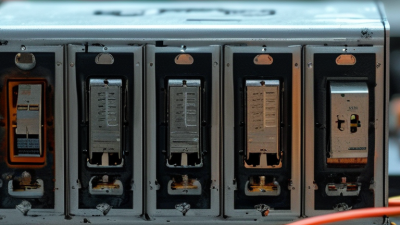
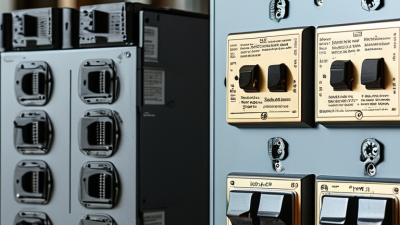
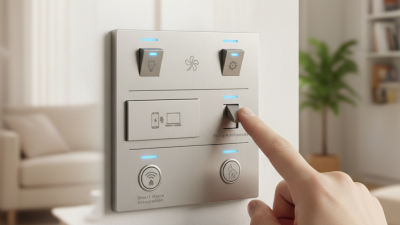
A Power Switch may look like a small component, but its choice can shape a product’s safety, efficiency, and service life. Buyers comparing options in 2026 will encounter mechanical switches, relays, MOSFETs, and IGBTs. Each serves different loads and operating conditions. A compact rocker switch may suit a control panel; a semiconductor switch may better fit frequent, fast switching. The right choice depends on more than price.
Power semiconductor expert Dr. Alex Lidow is a relevant industry voice, but no source was provided to verify a direct quotation from him. Rather than invent one, this guide uses a practical editorial rule: “Match the switch to the load, then verify the margins.” Check voltage and current ratings, switching frequency, heat dissipation, expected cycles, and the installation environment. A datasheet is a starting point, not proof that a part suits every design.
Small details matter. A warm enclosure, long cable run, or repeated motor start can change the demands placed on a switch. Global buyers should also confirm documentation, traceability, and supplier support for their target markets. Requirements can vary by application and destination, so product claims deserve careful review. Ratings on a label can look reassuring. They are not the whole story. This guide compares common Power Switch types, highlights their trade-offs, and identifies questions worth asking before procurement. Some specifications remain difficult to compare across suppliers; that deserves more scrutiny, not a confident guess.
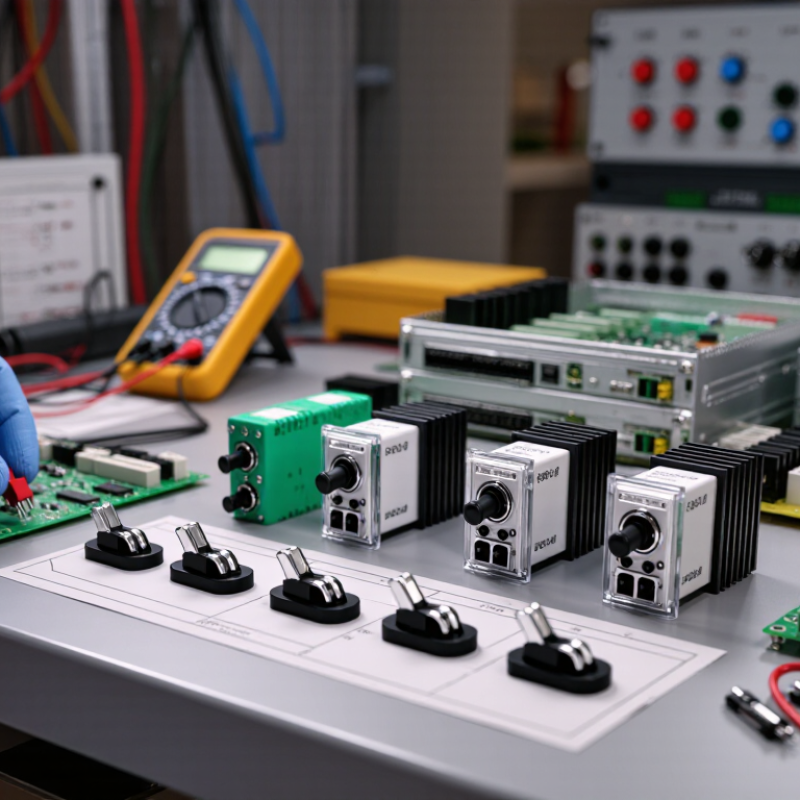
A power switch controls whether current can pass through an electrical circuit. In a basic lamp circuit, closing the switch joins two contacts and completes the path. The lamp turns on. Opening the switch separates the contacts and interrupts that path. That is the basic job.
Different designs suit different tasks. A rocker or toggle switch is operated by hand, while a push-button may act only while pressed or remain in position. Rotary switches select between several circuit paths. Inside, the number of poles and throws describes how many circuits the switch controls and how many connections it can select. Small details matter.
A switch must match the circuit’s voltage, current, and type of load. Motors and power supplies can draw a brief surge when starting, so a rating that looks adequate on paper may not be enough. AC and DC ratings are not automatically interchangeable. Buyers should also consider contact material, expected operating cycles, moisture, dust, and temperature. A switch is not necessarily a safe means of isolating equipment for service. Check the product documentation and destination-market requirements, and ask a qualified electrical professional when ratings or installation conditions are unclear. It is easy to focus on the actuator and overlook what happens behind the panel. That deserves a second look.
Power switches control whether current flows, which circuit receives it, or how much power reaches a load. A toggle or rocker switch uses moving contacts to open or close a circuit; the familiar click comes from that mechanical action. A push-button may work momentarily, returning when released, or latch in place to maintain its state. Rotary switches turn a shaft to select among several circuits or settings.
Electronic touch switches detect a finger through a change in capacitance, then use electronic components to switch the load. Dimmers use a different principle: many regulate delivered power by adjusting the portion of each AC cycle that passes through. The IEA’s Energy Efficiency 2023 report estimates that lighting accounts for about 15% of global electricity use, making reliable control more than a convenience. That distinction matters. In practice, dimmer compatibility with the lamp can still be overlooked.
Tips: Match the switch’s rated voltage and current to the load, and check whether it is designed for AC or DC. For a dimmer, confirm that the connected lamp supports dimming. A switch that feels right may not be electrically suitable.
Global buyers comparing power switch types should read the rating plate before comparing shape. Match voltage and current to the circuit and load. Motor and LED loads can stress contacts differently from resistive loads. IEC 60669-1:2017 covers household fixed-installation switches up to 440 V AC and 63 A. Those are scope limits, not safe defaults for every switch. Confirm the exact product configuration’s certified ratings.
Compare contact alloys, terminal metals, and body materials, not just the faceplate. Copper-alloy terminals and silver-based contacts are common, but performance depends on plating, clamping design, and heat testing. Check temperature-rise, endurance, and flame-resistance evidence in the technical documentation. Small details matter.
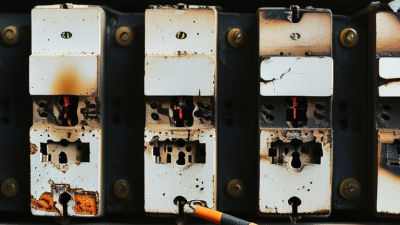
NFPA’s analysis of 2015–2019 U.S. fire data reported an average of 32,620 home fires yearly involving electrical distribution or lighting equipment. This is a safety reminder, not a switch-specific failure rate. For international purchases, verify local conformity marks, earthing arrangements, shutters, ingress protection, and terminal instructions. An IP rating matters most where dust or moisture exposure is expected. Ratings can be messy.
Compare switch types by application, electrical rating, construction, and safety provisions. Electrical ratings shown are representative catalog examples, not universal limits; confirm the exact AC or DC rating, load type, approvals, and installation conditions in the individual product datasheet.
| Switch type | Typical use and actuation | Representative rating examples | Common materials | Safety and selection points |
|---|---|---|---|---|
| Rocker | Panel or appliance on/off control; a broad rocker surface moves between stable positions. | Many panel and appliance models are offered around 6–16 A at 125/250 V AC. Ratings vary by pole count and load. | Flame-retardant thermoplastic or thermoset housing; copper-alloy terminals; silver-alloy contacts are common. | Check panel cutout, terminal protection, required pole count, and whether the rating covers motor or other inductive loads. |
| Toggle | Equipment panels and machinery; a lever provides a clear, manually selected position. | General-purpose examples commonly span about 3–20 A at 125/250 V AC; lower-current signal versions also exist. | Metal or thermoplastic actuator and bushing; copper-alloy terminals; silver-alloy contacts. | Verify panel thickness, sealing and ingress protection where needed, and suitability for the actual switching frequency and load. |
| Pushbutton | Momentary or latching user control; used on appliances, control panels, and machinery. | Power-switch versions may carry several amperes at mains voltage; many industrial control-button contacts are rated for control circuits rather than direct load switching. | Thermoplastic or metal button and body; copper-alloy terminals; contact alloys selected for the intended load. | Confirm momentary versus maintained action, contact configuration, and whether a separate contactor is required for the load. |
| Rotary | Multi-position selection, such as mode, range, or circuit selection; operated by turning a shaft or knob. | Power-capable models are available in ratings from a few amperes to higher values; the permitted rating depends on pole arrangement and switching duty. | Insulating thermoplastic or thermoset body; metal shaft; copper-alloy conductors and silver-alloy contacts are common. | Check the number of positions, switching sequence, break-before-make or make-before-break behavior, and load-specific rating. |
| Slide | Compact controls in small appliances and electronic equipment; a slider changes position along the switch body. | Many compact models are intended for low-current circuits; some power versions are rated for mains use. Use only the exact stated voltage and current rating. | Molded insulating housing, often thermoplastic; copper-alloy terminals; plated or silver-alloy contacts. | Do not infer a mains rating from size or appearance. Check terminal spacing, insulation specifications, and enclosure protection. |
| Snap-action / microswitch | Position, limit, door, or interlock sensing; a mechanism actuates a quick-change contact mechanism. | Catalog options range from low-level signal ratings to models rated around 10–20 A at 125/250 V AC; exact ratings are design-specific. | Thermoplastic or thermoset case; copper-alloy terminals; silver-alloy contacts are common in power-rated versions. | Check operating force, travel, overtravel, mechanical life, and whether the switch is explicitly approved for a safety-interlock function. |
| Selector switch | Panel-mounted maintained or spring-return control for choosing operating modes or control states. | Many selector units switch control circuits; power ratings depend on the contact block and load category, not just the actuator. | Metal or reinforced-polymer bezel and operator; insulating contact blocks; copper-alloy terminals. | Check maintained versus spring-return action, contact-block configuration, panel sealing, and applicable equipment standards. |
For global buyers, a power switch is compatible only when its electrical rating and installation format match the destination market. Regional standards differ in nominal voltage, frequency, wiring practice, and approved enclosure dimensions. A switch rated for one supply may not suit another, even if it fits the wall opening. Check the voltage and current markings against the equipment load. Details matter. Confirm whether the circuit requires a grounded connection, a neutral wire, or single-pole or double-pole switching. Plug shape alone tells you very little.
Installation details can change between countries and even between building types. Measure the wall box, check terminal layout, and verify whether the switch is intended for flush or surface mounting. In humid rooms or dusty workshops, the enclosure’s ingress-protection rating deserves attention. Not always obvious. Ask a qualified local electrician or importer to review the product’s test documents and required conformity marks before purchase. Standards can be revised, and a document accepted in one region may not satisfy another authority. It is easy to focus on price and overlook replacement parts or wiring diagrams. That small oversight can delay a project. Compare those practical details before ordering.
Compare common nominal single-phase supply voltages when selecting a power switch. Choose a switch type—such as SPST for simple on/off control or DPST when two conductors must be switched—based on the circuit and applicable local requirements.
Values shown are typical nominal supply voltages: actual installations and wiring configurations can vary. Japan uses 50 Hz in eastern regions and 60 Hz in western regions; the United States commonly uses 60 Hz, while the United Kingdom, much of Europe, and China commonly use 50 Hz. Confirm the switch’s voltage and current ratings, pole configuration, and required local certification before use. Reference standards include IEC 60038, ANSI C84.1, and GB/T 156.
2026 Best Power Switch Types for Global Buyers: How to Select a Power Switch for Each Application
Choose by load and use, not appearance alone. A rocker or toggle switch suits clear, manual on/off control on appliances and panels. Pushbuttons work well for momentary commands, while rotary switches can select several operating modes. For motors and LED drivers, check the switch’s load rating and permitted inrush current; startup demand can exceed steady current. Heat matters. The IEA’s Global Energy Review 2025 reports that global electricity demand grew 4.3% in 2024, reinforcing the need to match switches carefully to varied, growing loads. That figure is not a switch-sizing rule, though; the equipment’s own electrical specifications must guide selection.
For outdoor or dusty equipment, consider an appropriately rated enclosure and verify the switch’s environmental rating. In low-voltage DC systems, confirm the DC rating specifically; an AC rating does not automatically apply. Appliance designers can also consult IEC 61058-1, which covers switches for appliances. A familiar switch can still be the wrong one if its duty cycle or wiring conditions differ.
Tips: Compare rated voltage, current, load type, and expected switching frequency. Check the equipment label and installation manual. If motor or lamp startup current is unclear, pause and verify it with a qualified technician. It is easy to focus on the handle and overlook the contacts.