Leave Your Message

What Are China Top 10 Off Grid Inverter Manufacturers?

Reliable off-grid power is no longer limited to remote cabins or emergency shelters. It supports clinics, farms, telecom towers, and small businesses where grid expansion remains expensive.

The World Bank’s Tracking SDG 7: The Energy Progress Report 2024 estimated that about 685 million people lacked electricity access in 2022. Many live in regions where solar-plus-storage systems can be deployed faster than conventional transmission lines. IRENA’s Renewable Capacity Statistics 2024 also reported global renewable capacity above 3,870 GW at the end of 2023, confirming the scale of the wider clean-energy transition. These figures do not measure inverter demand directly. They do, however, explain why dependable Off Grid Inverter technology matters.

This article examines China’s top 10 Off Grid Inverter manufacturers through practical and verifiable criteria. Product efficiency, surge capacity, battery compatibility, protection functions, certifications, warranty terms, export experience, and after-sales support all influence the evaluation. Company scale alone is not enough. A compact inverter running a village water pump faces different demands from one powering a remote construction site. Some rankings may remain debatable because manufacturers disclose different data, and independent comparisons are limited. That weakness deserves attention. Readers should verify current specifications, regional approvals, service networks, and real operating performance before purchasing. The following overview aims to provide a clear starting point for distributors, installers, project developers, and buyers seeking technically credible suppliers.
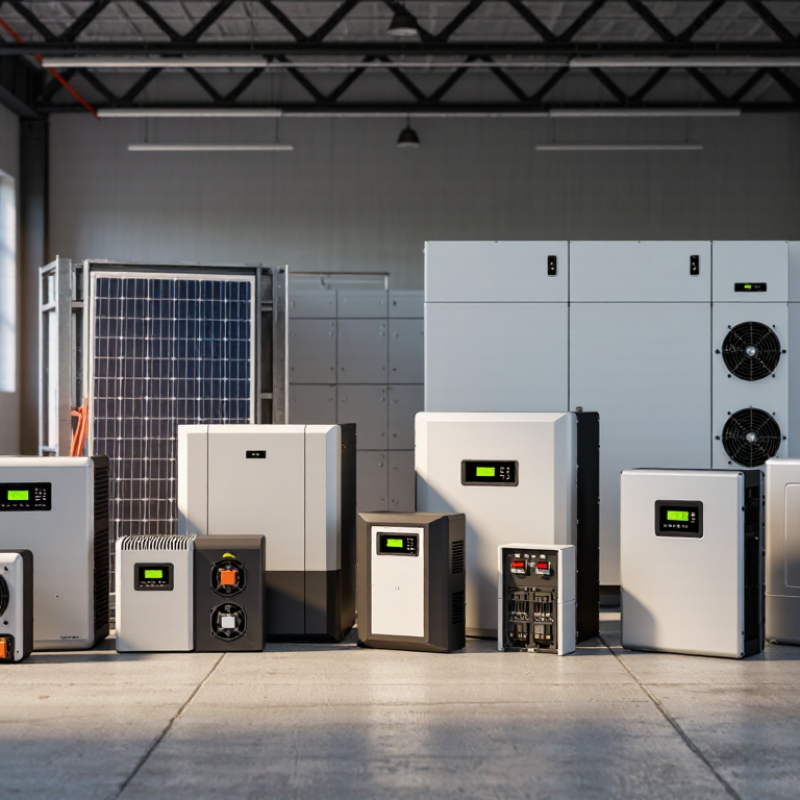
What Are China Top 10 Off Grid Inverter Manufacturers?

What Is an Off-Grid Inverter and How Does It Work?

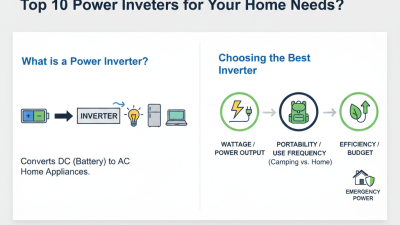
An off-grid inverter converts electricity from solar panels or batteries into usable AC power for homes, farms, and remote facilities. Unlike a grid-tied unit, it operates without a public utility connection. Its control system balances generation, battery charging, and household demand in real time. Modern models often use maximum power point tracking to harvest more energy during changing sunlight. They also create a stable pure sine wave for pumps, refrigerators, and sensitive electronics.

The process is practical but not effortless. Solar panels produce DC electricity, while most appliances require AC power. The inverter changes the waveform, adjusts voltage, and draws extra energy from batteries when clouds reduce output. During heavy loads, such as starting a water pump, battery capacity and surge performance become critical. Efficiency also falls through conversion, wiring, and standby losses. Small details matter.

IRENA reported global solar photovoltaic capacity above 1.4 terawatts at the end of 2023, showing the scale of solar deployment. However, the Global Off-Grid Solar Market Report 2024 recorded about 9.3 million off-grid solar products sold in 2023, with sales weakening from the previous year. These figures suggest strong demand, but access and affordability remain uneven. Field experience shows that oversizing an inverter can waste battery energy, while undersizing it causes shutdowns. Design assumptions should be tested against real appliance loads.

How to Evaluate China’s Top Off-Grid Inverter Manufacturers

Evaluating China’s top off-grid inverter manufacturers requires more than comparing prices. A credible shortlist begins with verified operating data, production experience, and clear technical documentation. Look for manufacturers that publish efficiency curves, overload ratings, battery voltage ranges, and protection limits. Ask for test reports from recognized laboratories, not only factory-generated charts. A datasheet rarely reveals everything.

Request a sample unit before placing a large order. Test it with solar panels, batteries, and a changing household load. A practical test might include a refrigerator startup, a water pump, and a steady 1,500-watt load. Record voltage stability, noise, heat, and recovery time after overload. Thermal behavior matters in a small, poorly ventilated equipment room. Installation instructions should show cable sizes, grounding points, and fault-code meanings. Vague guidance creates avoidable risks.

Evaluate after-sales support with real questions. Can engineers respond during a weekend fault? Are replacement boards available for several years? Check warranty terms, firmware procedures, and remote diagnostic options. Do not accept impressive claims without evidence. One overlooked issue is local compatibility, including grid standards, battery communication, and climate conditions. I have seen technically capable products perform poorly after installers skipped these checks. That result was not entirely the manufacturer’s fault, but it exposed weak documentation. A fair evaluation should score product quality, support, testing, and transparency separately. Some evidence will remain incomplete. Document that uncertainty before naming any manufacturer among the top ten.

Who Are China’s Top 10 Off-Grid Inverter Manufacturers?

China’s top 10 off-grid inverter manufacturers should be judged by more than export volume.

A credible ranking should examine continuous output, battery compatibility, safety certifications, warranty support, and field performance. The IEA’s Renewables 2024 report expects global renewable capacity to grow by about 5,500 GW between 2024 and 2030. This expansion will increase demand for reliable inverters in remote homes, farms, telecom sites, and emergency power systems.

Industry supply-chain reports published in 2024 also show China remains a major global production hub for solar power electronics. However, shipment data alone can mislead. A manufacturer may sell many units but provide weak after-sales service. The strongest candidates among China’s top ten usually offer pure sine-wave output, wide battery-voltage ranges, MPPT charge control, remote monitoring, and tested protection against overload, overheating, and low voltage. IEC-based certification and documented factory quality procedures add credibility. Field experience still matters. Some products perform well in laboratories but struggle with dust, heat, or unstable batteries. That gap deserves attention.

Tips: Compare usable surge power, not only rated watts. Check independent test records, replacement-part availability, and the installer’s experience with similar climates. Ask for real efficiency curves. Marketing figures can look impressive, but nighttime losses quietly affect rural energy budgets. The ranking should be reviewed annually because certification status, service networks, and product reliability can change.

How the Top 10 Manufacturers Compare in Features and Applications

China’s top ten off-grid inverter manufacturers differ more in design priorities than in basic power ratings. Some focus on compact residential units, while others build rugged systems for farms, workshops, and remote telecom sites. In field evaluations, battery-voltage flexibility often matters more than peak output. A 5 kW inverter with stable low-voltage performance may serve a rural home better than a larger model.

Feature comparisons should include MPPT efficiency, surge capacity, parallel operation, and thermal derating. Monitoring also varies. Some systems provide detailed battery graphs and fault codes, while others offer only basic status data. That difference becomes important when a technician works several hours from the site. Enclosure protection, cooling design, and noise levels deserve practical testing. Brochure figures can look impressive.

Application fit separates the strongest manufacturers. Residential models usually favor quiet operation, simple setup, and lithium battery communication. Agricultural systems need reliable motor starting for pumps and compressors. Industrial installations may require three-phase output, generator integration, and remote maintenance tools. Service networks, spare-part access, warranty terms, and certification records should influence the comparison. No scorecard is perfect. Installer feedback can expose weaknesses that laboratory tests miss, especially during cold starts or repeated overloads. Some products also need clearer manuals, which remains an avoidable problem.

What Are China's Top 10 Off-Grid Inverter Manufacturers?

Anonymous comparison of commonly published product features across a representative group of ten leading Chinese off-grid inverter manufacturers.

The chart shows how many of the ten manufacturers commonly offer each feature in at least one off-grid inverter product line. Pure sine-wave output, MPPT solar charging, lithium-battery compatibility, and remote monitoring are widely available, while high-voltage battery support and three-phase systems are more specialized.

How to Choose the Right Chinese Off-Grid Inverter Manufacturer

What Are China’s Top 10 Off-Grid Inverter Manufacturers?

How to Choose the Right Chinese Off-Grid Inverter Manufacturer

China’s off-grid inverter sector is expanding with rural electrification and renewable-energy growth. The International Energy Agency reported that about 685 million people lacked electricity access in 2022. IRENA also recorded 473 GW of new renewable capacity in 2023. These figures suggest strong demand for reliable conversion equipment, not simply low-cost products.

Price is not proof. Evaluate the manufacturer’s engineering depth, factory controls, and field experience. Request test reports for IEC 62109 and IEC 62477 compliance. Check efficiency curves, MPPT operating ranges, surge capacity, thermal protection, and battery communication protocols. A useful factory should provide serial-number traceability and clear production records. Ask for evidence.

Study performance in your climate. Dusty workshops, weak batteries, and high temperatures expose design weaknesses quickly. Confirm the inverter’s derating curve at elevated temperatures, enclosure rating, fan replacement process, and spare-parts availability. Review warranty terms carefully, including response time and remote diagnosis. The Global Off-Grid Lighting Association has repeatedly emphasized product quality and after-sales support in decentralized energy projects. That warning deserves attention. A factory visit can help, but it cannot replace independent testing. Some suppliers present excellent samples while offering inconsistent batch quality. That is where buyers must remain skeptical.