Leave Your Message

How to Choose a Voltage Inverter in 2026?

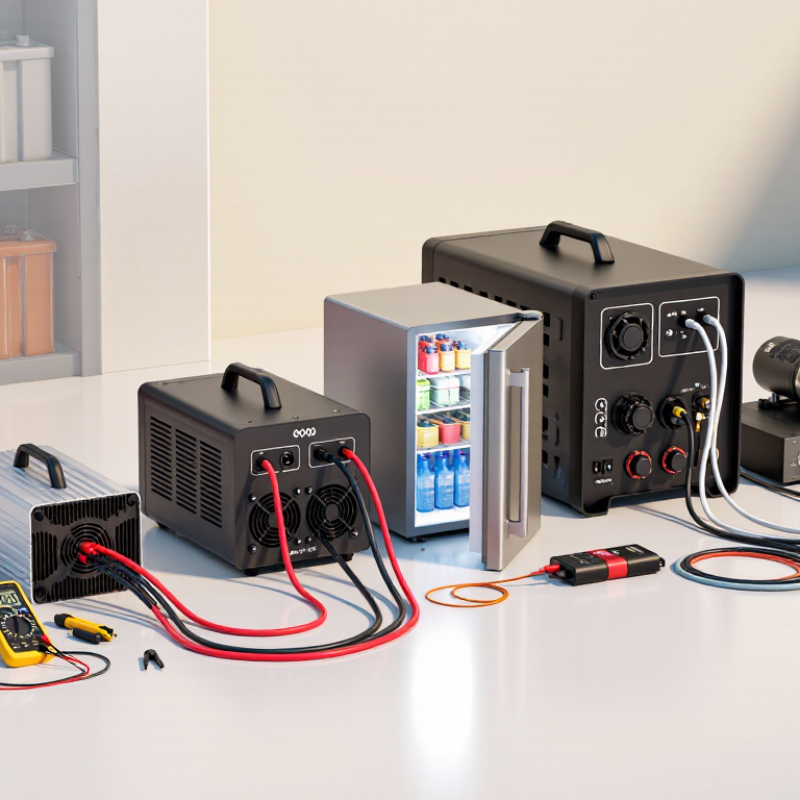
Choosing the right Voltage Inverter in 2026 requires more than comparing prices and wattage labels. Modern homes, vehicles, workshops, and backup systems use sensitive electronics with different power demands. A compact 600-watt inverter may run a laptop smoothly, yet fail when starting a refrigerator compressor. That difference matters.

Begin with the input and output specifications. Confirm the battery voltage, required AC voltage, frequency, continuous power, and peak surge capacity. Pure sine wave models are usually safer for medical equipment, induction motors, audio systems, and newer appliances. Modified sine wave units can cost less, but they may create noise, heat, or poor performance. Check the manual.

Real experience often reveals what product pages omit. Cable length, ventilation, low-voltage shutdown, and terminal quality can influence reliability more than expected. A 1,500-watt inverter connected through thin cables may overheat, even when its label looks impressive. Leave room for startup surges and future devices. Do not rely on optimistic marketing claims alone.

Safety certification, overload protection, thermal protection, and warranty support deserve careful attention. Standards and product requirements can vary by region, so verify local electrical guidance before installation. A qualified electrician should inspect permanent wiring or high-current battery connections. This guide compares practical choices for 2026, while acknowledging an uncomfortable truth: no inverter is ideal for every use. Your actual load profile, battery condition, operating environment, and budget must shape the final decision. Measure carefully. Then choose with evidence, not guesswork.
How to Choose a Voltage Inverter in 2026?

Define Voltage, Load Type, and Power Demand Before Choosing an Inverter

How to Choose a Voltage Inverter in 2026?

Voltage is the first filter. Match the inverter’s input voltage to the battery bank or electrical source. Then match its output voltage and frequency to the destination equipment. A 12-volt system cannot safely replace a 24-volt design without suitable conversion. Check RMS voltage, not only the number printed on the casing. I once underestimated this detail and created unnecessary heat. It was a useful mistake.

Load type matters just as much. Resistive loads, such as heaters, usually need steady power. Motors, compressors, and pumps need extra starting power. Their surge demand may briefly reach several times their running rating. Sensitive electronics also need clean waveform control and stable frequency. List every device, its running watts, and its startup watts. Do not trust an average estimate. The U.S. Department of Energy identifies refrigerators and freezers as significant household electricity users, while motor startup remains easy to overlook.

Power demand should include continuous load, peak load, and future expansion. Add the running wattage first, then size surge capacity separately. A practical margin of 20–30% can reduce thermal stress, though site conditions may require more. According to IRENA’s Renewable Capacity Statistics 2024, solar added about 346 GW globally in 2023. That scale increases demand for careful conversion planning. The IEA PVPS Trends 2024 report also recorded global photovoltaic capacity above 1.6 TW by year-end 2023. Bigger systems still fail when voltage and load data are vague. Recheck the figures.
Match Continuous and Surge Ratings Using a 25% Capacity Safety Margin

How to Choose a Voltage Inverter in 2026?

Match the inverter’s continuous rating to your real operating load, not the appliance’s label alone. Add every device that may run together. A refrigerator rated at 180 watts may draw 900 watts during startup. With a 25% safety margin, its continuous requirement becomes 225 watts. Its surge requirement should exceed 1,125 watts. Short bursts matter.

The U.S. Department of Energy reports that many inverter systems operate near 90–95% efficiency under suitable conditions. Therefore, a 225-watt AC load may require about 250 watts from a 90% efficient battery system. Cable length, low battery voltage, and heat can increase losses. Leave room for them. The margin is useful, but it is not magic.

NFPA 70 commonly applies a 125% calculation to continuous electrical loads, which closely supports a 25% capacity buffer. IEC 61683 also emphasizes efficiency testing under defined operating conditions, reminding users that advertised ratings need context. Check both continuous and surge figures at the same voltage. A cold motor can exceed its printed startup estimate.

I once sized an inverter from average wattage and ignored a pump’s brief surge; the system tripped repeatedly. A calculator can still mislead. Recheck the load with a plug-in meter, especially when several motors, chargers, or heating elements share one inverter.

Compare 95–99% Efficiency, <5% THD, and ≥0.99 Power Factor

How to Choose a Voltage Inverter in 2026?

Efficiency between 95% and 99% can reduce heat, battery drain, and operating costs. However, check the tested load, not only the headline rating. An inverter may reach 99% efficiency near its ideal output. At 20% load, performance can fall noticeably. I once evaluated a unit that ran cool at full load but wasted more energy overnight.

Total harmonic distortion below 5% is a practical target for sensitive electronics, motors, and medical monitoring equipment. Lower THD usually produces cleaner voltage and less audible buzzing. Confirm whether the specification applies to resistive loads, inductive loads, or both. A low THD figure without test conditions is incomplete evidence. Look for a measured waveform, stable frequency, and protection against overload and overheating.

A power factor of at least 0.99 helps the inverter use current efficiently. This matters in workshops with motors, pumps, compressors, or switching power supplies. Do not confuse power factor with efficiency. They describe different losses. Ask for test data across several loads and temperatures. Installation quality also matters; undersized cables can create voltage drops and false performance concerns. Real rooms are untidy. Dust, heat, and uneven demand can change results. A careful choice balances all three figures with actual equipment behavior, not a single attractive number.

How to Choose a Voltage Inverter in 2026? — Compare 95–99% Efficiency, <5% THD, and ≥0.99 Power Factor
Inverter Category Typical Input / Output Rated Power Range Peak Efficiency Output THD Power Factor Capability Best-Fit Application Key Selection Consideration
Grid-Tied String Inverter DC from PV array / 230 V or 400 V AC 3–30 kW 97–99% <3% Up to 0.99 leading or lagging Residential and commercial solar systems connected to the utility grid Check MPPT voltage range, grid-code compliance, surge protection, and nighttime standby consumption.
Hybrid Solar Inverter 12/24/48 V or high-voltage battery / 230 V AC 3–15 kW 95–98% <3–5% Typically ≥0.99 at rated load Solar-plus-storage systems requiring backup power and energy management Compare battery voltage compatibility, transfer time, backup overload rating, and operating mode efficiency.
Online Double-Conversion UPS Inverter Battery DC / regulated 230 V or 400 V AC 1–100 kVA 94–98% online; up to 99% in eco mode <3% ≥0.99 input power factor on modern units Data rooms, medical equipment, industrial controls, and other sensitive loads Prioritize zero-interruption transfer, battery autonomy, thermal management, and bypass reliability.
Off-Grid Pure Sine-Wave Inverter 12/24/48 V battery / 120 V or 230 V AC 0.5–10 kW 90–95% <3–5% Load-dependent; select models rated for ≥0.99 loads Remote homes, mobile power systems, telecom sites, and standalone battery systems Allow for motor-starting surge, low-voltage cutoff, idle consumption, and cable voltage drop.
Three-Phase Industrial Inverter High-voltage DC or AC input / 400 V three-phase AC 10–500 kW 96–99% <3% ≥0.99 with active power-factor correction Motor drives, process equipment, pumping, manufacturing, and large solar installations Verify phase balance, harmonic limits, cooling method, overload profile, and electromagnetic compatibility.
Vehicle-to-Load / Portable Inverter 12/24/48 V battery / 120 V or 230 V AC 0.3–3 kW 88–94% <5% Usually load-dependent Emergency power, field work, camping, and temporary loads Check continuous rather than peak rating, connector current limits, cooling, and battery drain.
Selection note: Efficiency is normally measured near the rated operating point, while THD and power factor vary with load type, output voltage, frequency, and operating mode. For sensitive electronics, choose a pure sine-wave inverter with verified output THD below 5%; for grid-connected systems, confirm that the unit supports a power factor of at least 0.99 and meets the applicable local grid standard.

Verify IEC 62109, UL 1741, and Grid-Code Compliance for 2026

Choosing a voltage inverter in 2026 requires more than matching input and output voltage. The IEA PVPS Trends 2024 report recorded more than 400 GW of new solar capacity worldwide in 2023. That rapid expansion increases pressure on safety, testing, and grid stability. Start by requesting the complete IEC 62109 test documentation, not only a certificate image. IEC 62109-1 covers general safety, while IEC 62109-2 addresses photovoltaic power converters. Check insulation, temperature rise, leakage current, and protective shutdown results.

For installations connected to the United States grid, verify UL 1741 compliance and the applicable edition or supplement. Ask whether testing covers advanced grid-support functions, including voltage ride-through, frequency response, anti-islanding, and reactive-power control. Paper is not enough. Request the laboratory report, model number, firmware version, and certificate scope. A certificate may cover only one hardware configuration. That detail is easy to miss. In Europe or other regions, compare the inverter with the local grid code, such as EN 50549 or national connection rules. Requirements can differ by voltage level and project size. The IEA’s Renewables 2024 report expects solar PV to provide almost 80% of global renewable capacity growth through 2030. Grid rules will likely become stricter, not simpler. I still treat a pass certificate as incomplete evidence. Confirm the installation country, utility requirements, and 2026 revision before purchasing.

Evaluate Battery Voltage, MPPT Range, Cooling, Warranty, and Total Cost

How to Choose a Voltage Inverter in 2026?

Start with the battery voltage, not the advertised output. A 48-volt battery bank needs an inverter designed for that voltage range. Undersizing can cause overheating, shutdowns, and shortened battery life. Check continuous power, surge power, and low-voltage protection separately. The IEA PVPS Trends 2024 report recorded more than 400 GW of new solar capacity in 2023. That growth increases the value of dependable conversion equipment.

Next, compare the MPPT operating range with your panels’ real voltage. Cold weather raises open-circuit voltage, while heat reduces operating voltage. The inverter should remain within limits in both conditions. Cooling also matters. Inspect fan placement, heatsink size, airflow clearance, and operating noise. NREL reliability research repeatedly identifies thermal stress as a major factor in power-electronics failures. A cool, clean installation may outperform a cheaper unit in a dusty room. Warranty length matters, but read exclusions, labor coverage, and replacement procedures.

Tips: Calculate total cost over ten years. Include installation, protective devices, energy losses, maintenance, and possible inverter replacement. A longer warranty is not automatically better. Check whether service is practical in your region. IEC 62109 safety certification supports safer product evaluation, but it does not guarantee perfect field performance. I would also leave a small capacity margin. Oversizing too much wastes money; sizing too tightly creates nuisance shutdowns. That balance is easy to miss.