Leave Your Message

Best Power Switch Manufacturers in China

Choosing a Power Switch manufacturer in China involves more than comparing prices or browsing product photos. Buyers need to assess electrical ratings, switching life, materials, quality controls, and the supplier’s ability to support consistent production. A compact rocker switch may look simple, yet its terminals, housing, and internal contacts all affect performance.

Details matter.

This guide introduces established types of Chinese manufacturers and the factors worth checking before requesting a quotation. It considers product range, customization, documentation, sample availability, communication, and experience with export orders. These points can help importers, engineers, and purchasing teams prepare useful questions and compare suppliers on a clearer basis.

A manufacturer’s website is only a starting point. Request current specifications, confirm that samples match the quoted model, and ask how the company handles inspection and production changes. Where relevant, review available test reports and certifications, while verifying that they apply to the exact product and destination market. Do not assume every factory offers the same level of technical support.

Some suppliers may be strong in household switches but less suited to industrial control applications. Others may offer extensive customization, with longer lead times or higher minimum orders. These trade-offs deserve attention. Even a careful comparison has limits: product needs, order size, and communication quality can change the best choice. The sections ahead provide a practical framework for evaluating China’s Power Switch manufacturers without treating marketing claims as proof.
Best Power Switch Manufacturers in China

What Power Switches Are and How China’s Manufacturing Market Is Structured

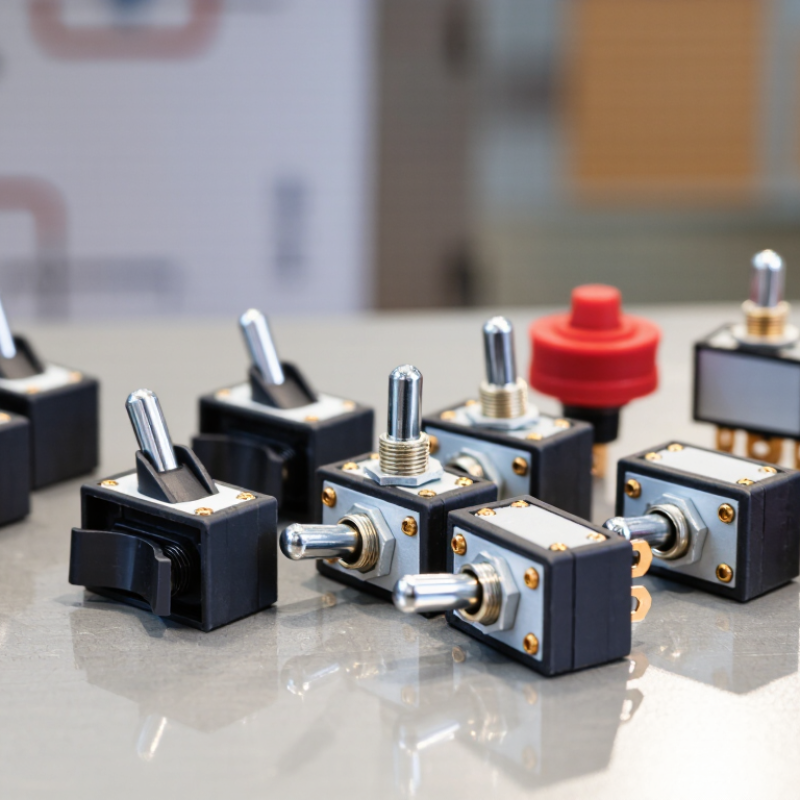
A power switch controls whether electrical current flows through a circuit. Depending on its design, it may be operated by a person, a machine, or an electronic signal. Common types include rocker, toggle, push-button, and rotary switches. Their ratings, contact materials, insulation, and mounting styles affect where they can be used. A switch that fits a panel may still be unsuitable for its electrical load. Details matter.

China’s manufacturing market includes component makers, assembly factories, tooling suppliers, and testing services. Some manufacturers focus on standard parts produced in volume; others customize dimensions, terminals, or operating force for specific equipment. Suppliers may manage the full process, while smaller operations rely on partners for molding, plating, or testing. This structure can offer flexibility, but supplier capabilities vary. A polished sample is not proof of consistent production.

Tips: Ask for current and voltage ratings, drawings, material details, and test records. Check sample fit and switching feel, then confirm how production batches are inspected. Clarify tolerances and change-control practices before ordering. If a specification is vague, pause and ask for evidence. That extra check can feel tedious, and it is easy to overlook when schedules are tight.

Criteria for Evaluating Chinese Power Switch Manufacturers

A reliable power switch manufacturer should provide clear ratings for voltage, current, temperature, and electrical life. Check whether test conditions match your application. A switch rated for a small control panel may not suit a device exposed to vibration or frequent switching. Ask for dimensional drawings, terminal details, and material specifications before approving a sample.

Look closely at quality controls. Useful evidence includes incoming-material checks, in-process inspection records, and final electrical tests. Request batch traceability and examples of failure-analysis reports, with sensitive customer details removed. Then compare a production sample with the approved drawing: measure the mounting hole, inspect contact movement, and test operation under the stated load. Small differences matter. A polished sample alone proves little about later batches.

Communication is another practical measure. Can the engineering team explain a rating, identify its test method, and respond clearly to a design change? Ask about tooling ownership, lead times, and how production changes are documented. These answers help reveal whether a supplier can support a product beyond the first order. Still, paperwork is not performance. I would verify key claims through independent testing when the switch is safety-critical; this adds cost, but skipping it may be the weaker choice.

Criteria for Evaluating Chinese Power Switch Manufacturers

Suggested evaluation weights (%) for comparing suppliers. These are rubric recommendations, not measured company results.

Prioritize product safety and compliance, then assess quality consistency, technical capability, delivery reliability, and total cost. Verify certifications and performance claims against relevant documentation and testing.

Leading Power Switch Manufacturers in China and Their Specialties

Best Power Switch Manufacturers in China

China’s power switch manufacturers serve a wide range of electrical equipment markets. Their specialties often differ by product type, production scale, and testing capability. Some focus on compact rocker and toggle switches for appliances. Others produce panel-mounted selectors, push-button switches, or high-current disconnect devices for industrial systems.

A useful supplier assessment starts with the application. Check rated voltage, current, contact material, operating temperature, and expected switching cycles. For example, a switch used beside a warm motor may need stronger heat resistance than one fitted to a small desk lamp. Ask for test reports and sample parts, then inspect terminal fit and switching feel. Small details matter.

Many factories offer custom housings, terminal layouts, or actuator shapes. This can help when a standard part does not fit an existing enclosure. But customization may increase lead time and complicate replacement sourcing. Not every specification sheet tells the full story. A practical buyer should compare samples under realistic conditions and confirm how changes are documented. Production capacity is useful, though consistent quality deserves equal attention.

Product Technologies, Certifications, and Quality Standards

Power Switch Technologies, Certifications, and Quality Standards

A power switch may look simple, but its contacts, insulation, and housing determine how reliably it performs. Chinese manufacturers produce rocker, toggle, push-button, and rotary switches for different loads and environments. Design details matter: contact materials affect resistance, while enclosure shape can help limit dust entry. A firm click is reassuring, though it does not prove long-term durability.

When evaluating a manufacturer, ask how products are tested. Useful checks include electrical endurance, temperature rise, dielectric strength, and mechanical cycling. Request test reports for the exact model, not just a general company brochure. Certifications such as those required for a target market can support compliance, but certificates should be current and match the product’s ratings. Small differences in voltage, current, or terminal design can change suitability.

Quality control should extend beyond final inspection. Ask about incoming material checks, production sampling, and traceability for each batch. A factory that records failures and corrective actions offers more evidence than polished claims alone. In practice, documentation can be incomplete, and even a careful supplier may need follow-up. Check samples under realistic operating conditions before placing a large order.

Best Power Switch Manufacturers in China — Product Technologies, Certifications, and Quality Standards
Evaluation Dimension Product Technology or Standard What Buyers Should Verify Typical Application
Switching technology Mechanical switches, including rocker, toggle, push-button, and rotary designs Rated voltage and current, electrical life, contact resistance, and load type Household appliances, control panels, and industrial equipment
Illuminated controls LED-illuminated switches with specified voltage, color, and terminal configuration LED supply requirements, insulation design, indicator visibility, and wiring diagram Appliances, vehicle interiors, and operator panels
Environmental protection Enclosures and sealing designs assessed against IEC 60529 IP ratings Tested IP rating, installation orientation, cable entry, and exposure conditions Outdoor equipment and areas exposed to dust or water
Electrical safety Design and testing aligned with applicable IEC or national product standards Applicable standard and edition, voltage category, insulation, and test reports Consumer, commercial, and industrial electrical products
Material compliance Material declarations and restricted-substance controls, where applicable Current RoHS documentation, material traceability, and scope of the declaration Products intended for regulated international markets
Quality management Documented production and quality processes; ISO 9001 certification may be relevant Certificate validity, issuing body, certified site, and manufacturing scope Supplier qualification and ongoing production control
Product certification Market-specific approvals, such as CCC for applicable products sold in China Certificate number, model coverage, validity, and whether the exact product is included Products subject to local market access requirements
Reliability testing Mechanical endurance, electrical endurance, temperature, and vibration testing Test method, sample size, acceptance criteria, and results for the specified model High-cycle or demanding operating environments
Manufacturing consistency Incoming inspection, in-process checks, and final functional testing Inspection plan, lot traceability, defect handling, and change-control procedures Repeat orders and multi-site production programs

How to Match a Manufacturer to Your Application and Supply Needs

Best Power Switch Manufacturers in China: How to Match a Manufacturer to Your Application and Supply Needs

Choosing a power switch manufacturer starts with the actual job the switch must perform. Define the operating voltage, current, load type, switching frequency, and installation environment. A switch used in a warm control cabinet may need different materials and ratings from one exposed to dust or vibration. Ask for test data that matches your intended conditions, not just a general product sheet. Check terminal dimensions, mounting details, and required service life against your design. Small mismatches can cause delays.

Supply capability matters just as much as technical fit. Ask about production lead times, minimum order quantities, sample availability, and how changes are communicated. Request traceable inspection records and clear procedures for handling inconsistent batches. A factory visit or live production review can reveal practical details, such as labeling accuracy and packaging quality. These checks take time. They may still miss something, so keep a sample approval step before larger orders.

Tips: Share a simple application brief, including a wiring diagram and expected order volume. Compare replies for specific evidence, not confident wording alone. Clarify who approves design changes and what happens if a delivery slips. One overlooked question can matter.