Leave Your Message

What Is a House Inverter and How Does It Work?

A House Inverter is the working bridge between household electricity and the energy produced or stored by a solar system. Solar panels generate direct current (DC), while most home appliances use alternating current (AC). The inverter converts that electricity into a usable form. It may also monitor power flows, charge a compatible battery, or manage electricity sent to and drawn from the grid. The exact functions depend on the inverter and system design.

Photovoltaic safety specialist John Wiles has contributed extensively to guidance on safe PV-system design. A practical paraphrase of the safety principle associated with his work is: “Choose and install an inverter as part of a properly designed system, not as a stand-alone box.” This is a paraphrase, not a verified verbatim quotation. The distinction matters. A hybrid inverter, for example, can coordinate panels, batteries, and grid power, while a simpler model may only convert DC to AC. During operation, the unit senses incoming power and adjusts its output to suit household needs. You might hear a fan start as the kitchen lights come on, or see an app show solar production rising on a bright afternoon. Small details, but useful ones. The basic explanation can make the device sound effortless; real performance also depends on correct sizing, compatible components, ventilation, and careful installation. Not magic. Understanding those limits makes it easier to compare inverter types and ask better questions before choosing equipment.
What Is a House Inverter and How Does It Work?

Definition and Role: Converting 12–48 V DC into Household AC

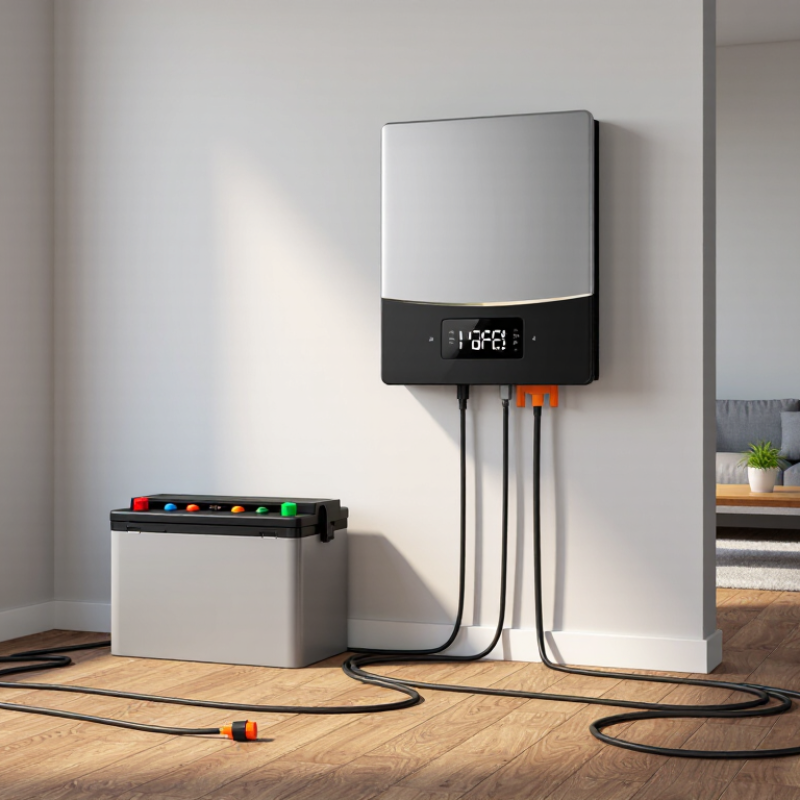
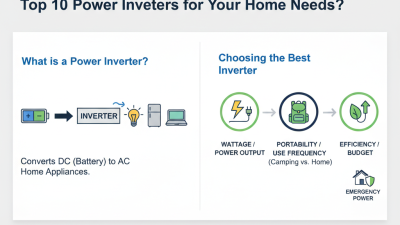
A house inverter is the bridge between a low-voltage battery and household appliances. It accepts direct current (DC), often at 12, 24, or 48 volts, and converts it into alternating current (AC). The output must match the appliances’ voltage and frequency, such as 120 volts at 60 hertz or 230 volts at 50 hertz. Inside, switching electronics rapidly reshape the DC supply into an AC waveform, while control circuits help keep that output within its rated range. Small details matter.

Conversion is not lossless. NREL’s PVWatts Version 5 technical reference uses 96% as a default nominal inverter efficiency in its model; actual performance depends on load and equipment conditions. At 90% efficiency, a 1,000-watt AC load needs about 1,111 watts from the DC source, before accounting for other system losses. On a 12-volt battery, that can mean substantial current, so suitable cables and secure connections matter. Heat has a cost. An inverter’s continuous rating covers sustained demand, while its surge rating supports brief startup loads, such as a refrigerator compressor. Check the battery voltage carefully: a unit designed for 48 volts will not operate properly from a 12-volt source. The neat conversion diagram can hide those practical limits.
Core Components: Battery, Switching Circuit, Filter, and Control System

A house inverter converts a battery’s direct-current electricity into alternating current for household circuits. The battery stores energy; the control system decides when to charge, discharge, or pause. Voltage and temperature sensors help it respond to changing loads, such as a refrigerator compressor starting. The switching circuit rapidly turns battery current on and off to form an alternating waveform. It works hard, even when nothing dramatic seems to be happening.

A filter smooths switching ripple before power reaches appliances. In practice, wiring length, heat, and sudden motor loads can affect performance; the neat diagram does not show every real-world compromise. NREL’s PVWatts Version 5 manual uses 96% as a default inverter-efficiency value. That is a modeling assumption for photovoltaic systems, not a guaranteed rating for every household battery inverter. Check the unit’s own specifications and operating conditions.

Tips: Keep the inverter cool and unobstructed, and match its continuous and surge ratings to your expected loads. A kettle may draw steadily; a pump can demand a brief startup surge. Note which circuits the system supports, too. Small details matter.

Conversion Steps: DC Switching, Waveform Shaping, and AC Output

What Is a House Inverter and How Does It Work?

A house inverter changes direct current from a battery or solar system into alternating current for household circuits. Inside, electronic switches turn the DC supply on and off rapidly. Their timing creates alternating pulses, rather than AC immediately. Think of a steady stream being divided into carefully timed bursts. The switching rate and control pattern determine the inverter’s output. Real installations are less tidy than diagrams: battery voltage can vary with charge and load.

Waveform shaping turns those pulses into usable AC. Many inverters use pulse-width modulation, adjusting each pulse’s width to approximate a smooth sine wave. Filters reduce unwanted high-frequency components before power reaches connected appliances. The inverter also controls output voltage and frequency, commonly matching the system’s intended household supply. A modified waveform may operate some devices, but motors or audio equipment can behave differently. Not every load reacts alike. The exact output depends on the inverter design and operating conditions.

Tips: Check the inverter’s rated power and surge capacity against your appliances. A refrigerator may draw extra current when its compressor starts. Keep ventilation openings clear, and ask a qualified electrician to assess wiring and protection devices.

Common Ratings: 120/230 V AC, 50/60 Hz, and 90–95% Efficiency

A house inverter converts direct current from a battery or solar system into alternating current for household circuits. Its output is commonly rated at 120 V or 230 V AC, depending on the electrical system it is designed to serve. Check the appliance labels: a kettle marked for 230 V may not work properly on a 120 V supply. The inverter must also match the local frequency, usually 50 or 60 Hz. Motors and clocks can behave poorly when the frequency is wrong. Small details, big consequences.

Efficiency ratings often fall around 90–95%, but actual performance varies with load, temperature, and equipment condition. At 90% efficiency, a 1,000-watt AC load draws roughly 1,111 watts from the DC source, with the difference becoming heat and other losses. That heat needs somewhere to go. A crowded cupboard can restrict airflow and reduce performance. Ratings are useful, but they are not promises for every operating condition.

Tips: Compare the inverter’s continuous rating with the devices you expect to run, and allow extra capacity for motor start-up surges. Confirm voltage and frequency before connecting appliances. Keep ventilation clear, and watch for unusual heat or repeated shutdowns. I’ve seen people focus on the headline efficiency figure and miss the surge rating; that’s an easy mistake, and worth checking against the appliance manuals.

What Is a House Inverter and How Does It Work?

Typical AC output ratings include 120 V or 230 V RMS and a frequency of 60 Hz or 50 Hz, respectively. This chart shows ideal sine-wave examples over 40 milliseconds.

The plotted peak voltages (about 170 V and 325 V) are calculated from the RMS values for ideal sine waves. Real inverter output can vary; typical efficiency ratings are around 90–95%.

Output Quality and Safety: Pure Sine Wave, Typically <5% THD, and Protection

A house inverter converts battery or solar-panel direct current into alternating current for household circuits. A pure sine wave rises and falls smoothly, like utility power, helping motors run steadily and reducing audible buzzing in some appliances. Total harmonic distortion, or THD, measures waveform distortion. Below 5% is a useful quality target, but it is not a universal guarantee of compatibility. Load, measurement method, and inverter operating conditions matter. Check the specified THD under the loads you actually use.

IEEE Std 519-2022 sets an 8% voltage-THD limit at the point of common coupling for systems at or below 1 kV. That limit concerns a shared power-system connection, not an inverter’s appliance outlet, so it should not be treated as an inverter rating. Read the product’s own test specifications.

A steady waveform is only part of safety. Look for documented protection against overload, short circuit, overheating, and abnormal battery voltage; these features can shut output down before a fault escalates.

Some protection details are easy to overlook. Keep the inverter ventilated, avoid covering its cooling openings, and have wiring and grounding checked by a qualified installer. Even a clean waveform cannot compensate for loose terminals or poor installation.